

By Cait Arran
Publishing by Mel
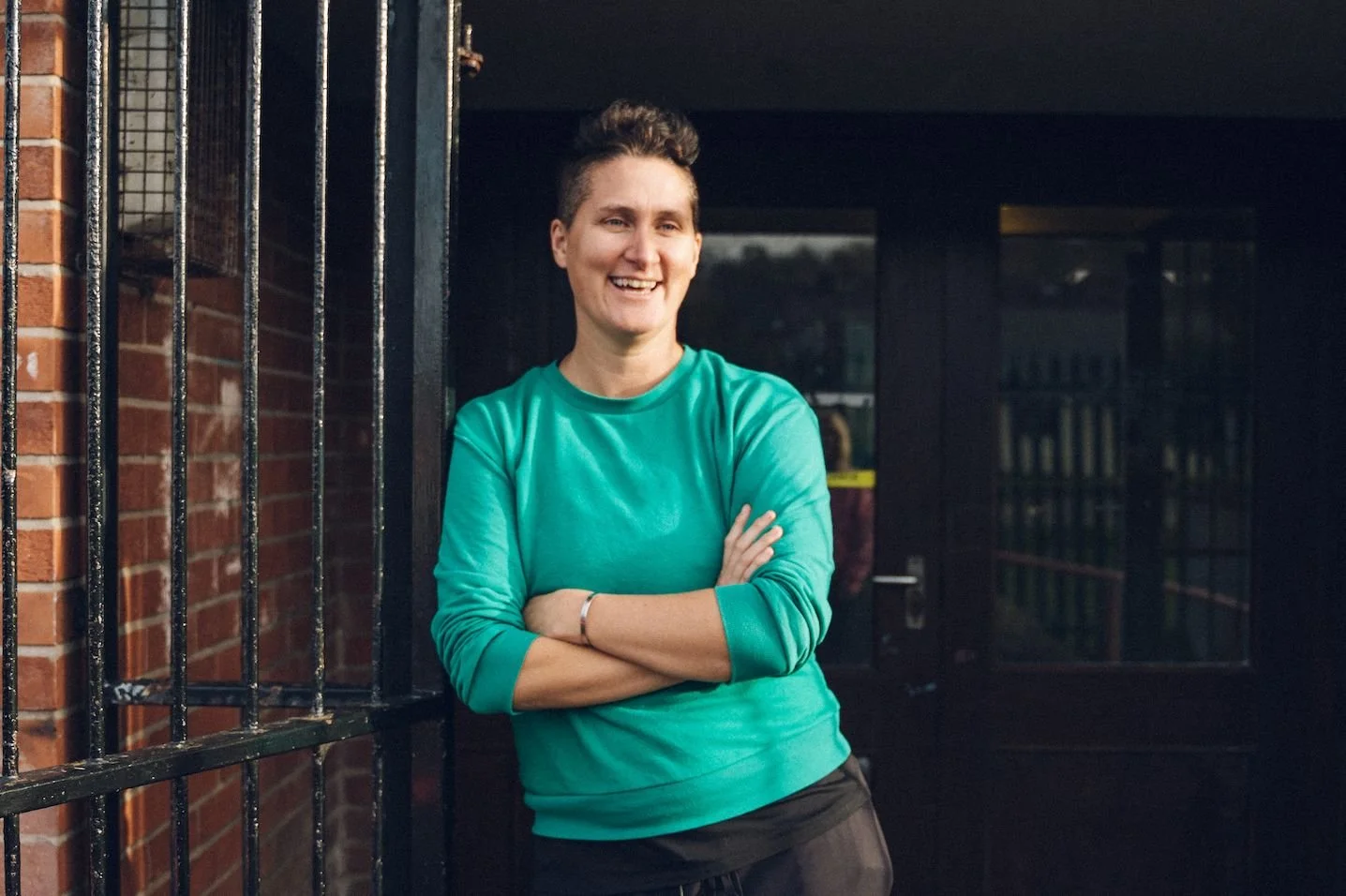
Bethan Marlow is an award-winning Welsh playwright and screenwriter whose work centres on women, the queer community and working-class experiences. Her writing has earned her the Theatre Wales Award for Best Show for Young People, while Bethan has also been recognised as a BAFTA Cymru Breakthrough nominee and selected for a number of prestigious screenwriting and development programmes, With a distinctive voice rooted in the people and communities they know, Bethan is a writer committed to bringing underrepresented stories to the forefront.
How would you introduce yourself as a playwright, a queer person, a Welsh person, or something else entirely?
I would. Ooh. I’d introduce myself as a... North Walian, Gender Queer, Mam, that is a writer.
What's something about you that audiences might be surprised to discover from watching your shows?
That I love cheesy films. And I love Chick Lit books –they’re the only type of books I read, and I don't think people automatically link that to me. Like, I've watched Sex in the City more times than I could count. The same with Glee! Oh my god, I’m a MASSIVE Glee fan.
Oh my god no way! Who's your favourite Glee character?
Easy. Mercedes.
How do you feel about the reboot of Glee that's coming? Have you seen that announced today?
No?? Are you joking? That’s amazing. I'd watched all of Glee ages ago, and then I rewatched it with my family, with my kids, and then we stopped when the themes started to kind of change and get deeper. There's lots of heavy stuff, and my kids are 10 and 12 – at the time they were like 9 and 11. There is such great stuff about it that opens up for us to talk to the kids about. That was really great – loads about sex and all that kind of stuff which all felt age appropriate, but then we were getting to places where I was finding it really hard to kind of explain things. But yeah, I did NOT know about the reboot. That is so exciting.
What did you need to see on stage when you were younger that you weren't seeing?
Um... Gosh, I mean a whole list. Any queer characters, especially any female or gender queer characters. If there were any queer characters, they were men and they were having a really, really tough time. Also, on top of that, I needed to see strong female characters, female characters that weren't linked to the story of like a man or a love interest or, you know. Even that was still happening. Quite a while ago now, I mean, talking 80s, early 90s. Yeah, it was shocking. But I would say that even, I know your question is about on stage, but even off stage, the reason that I originally went to train as an actor is because I fell in love with theatre and I had no idea there were any other jobs that existed for someone like me, except for acting. Any director I knew was a man, and I thought to be a writer, you had to either be dead, or rich, or both. I mean, I wrote all the time, but I never thought that, you know, that I'd be allowed to be a writer, that people would actually like, hire me.
Do you think queer representation has improved substantially since then, or do you think that we've just become better at marketing it?
Oh, good questions.. No, it is better. It is better. Glee is a perfect example of that, I think. We have characters that are queer that also have another story attached to them. But it is in no way where it should be. I think we still are scared of putting our queer characters as the protagonist of a mainstream show. We are still hesitant about making that character more than a best friend, or something on the side, and I think that comes because the people who are creating those stories often are not able to speak that authentically. So they want the representation because they're good people and they believe in the good fight, but they know that they can't write it.
If you could put one aspect of lesbian or queer life on stage that you've never seen represented properly, what would it be?
Easy. Motherhood. Motherhood for lesbians. Definitely. It is never talked about, and it is really, really tangled, and complex. And, yeah, we never, ever see it, and it is very different to a gay man's story and journey, and very often, you know, and it's different to straight couples, we have to do IVF, and it's different to single people, whether they're queer or not that go and have babies, and we'd never, ever see it.
The ‘tomboy’ has a very long history in queer culture. What do you think that figure offers young people who don't conventionally fit the idea of femininity?
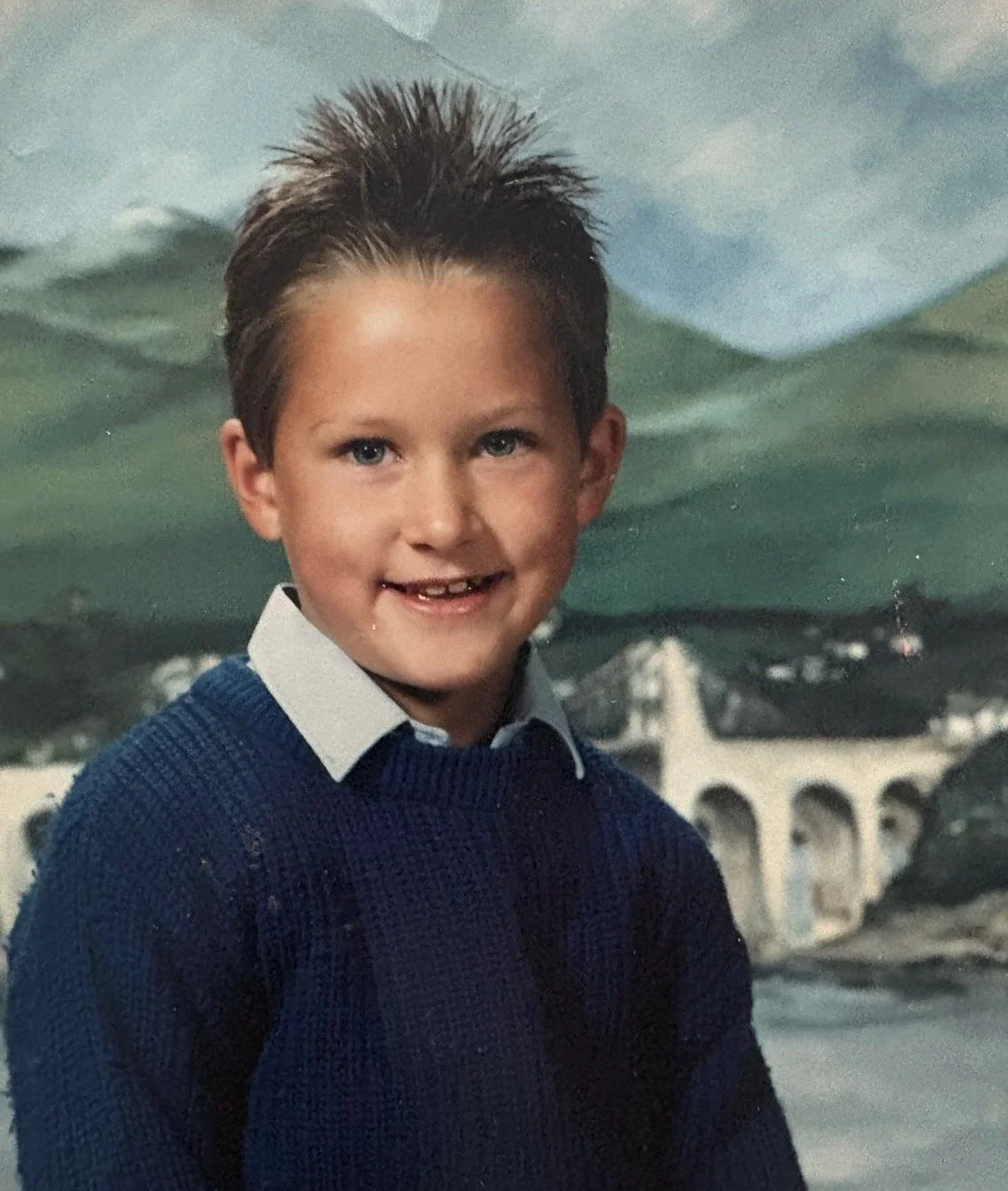
Yeah, I mean, I still identify as a tomboy, now and I always have. And in fact, I'm going to show you this photo and you're welcome to have it if it's useful, you're welcome to use it. This is me when I was, I think, six, getting my photo taken at school.
I had the best parents ever because never, ever, did they give me any restrictions of how I should look or how I should do my hair and they happily took me to get my ‘spikes’ and my dad would spike my hair every morning with gel and I still remember that sensation. It's weird, isn't it? So I've always had nothing but positivity around the word tomboy, until, God, like my 30s, when I was having straight women in the arts telling me that I can't use that word, because they tell their daughters that ‘you don't have to call yourself a tomboy just because you like things that are not girly’. That ‘you're just a girl and you're allowed to like all of those things’ and I was like, hang on, like you can't tell me that I can't identify with that because of the negative connotations that you've decided to attach to it! So I think it's really, really important.
My entire family would call me a tomboy, but it was never in a way that that was bad. So it's interesting. I think it's so important for us to have all of that existing and to not… Yeah, why is it bad? Because it has the word boy in it? I just often think that the issue for all of this very often doesn't lie with the Queers. You know what I mean? After my spikey hair, I then had curtains and stuff and then through my teenage years, just long hair back into ponytail all the time until I then was brave enough sometime in my 20s to cut it again. So, yeah, I think it's a straight person's problem, tomboy. I really do. And so in that case, not mine.
Do you think coming out is still a useful narrative for queer storytelling on stage or screen or are you more interested in what happens after the coming out story supposedly ends?
Yeah. It's a hard one, that. I mean, I don't like that the only stories we have, especially for that age, are coming out stories. But I also don't want to take away from the fact that coming out is still massive, you know, however much people say “oh it's so much better now” or “oh it's easy now”. When you're the individual that's having to come out, it's still a huge deal because you still have that fear in you that you're going to get rejected and sadly that is the world that we live in. I guess for me now, as a 45 year old, then obviously, I've experienced much more after the coming out, and there's much more to say, and it's really important for us to know that that's not the only or the biggest hurdle that we face, or the most dramatic and interesting thing about us. I think it is a balance. I'm writing a feature film at the moment, based on a true story, about a trans girl from Llanelli. And.. she's like 17/18, and it's a coming of age story. And in it, there's elements about her coming out, but it's not what it's about. It’s not the whole story.
Having trans stories in films that are not rated 18 plus is so, so rare. So this is a commercial mainstream story, and it's not Disney, it's far from Disney, but it's still, it's full of queer joy, and I think it's so important to have that. It is rated 15, so these young people can actually watch it and not leave thinking, like life is hard, because of course life is hard and I'm not denying that, which is why these stories are important, but we have to balance it with joy as well, because otherwise, it's scary for everyone, you know, family and friends included.
Now obviously some of your work is bilingual, but some is just in Welsh. Does writing in Welsh change the way that you express queerness or desire or intimacy? Are there feelings that come more naturally in one language than another?
That's such an interesting question. So, I didn't write in English for many, many years, because I couldn't think fast enough in English. It was like late 20s, early 30s when I started writing in English confidently. I think, for writers, you've got the age that you actually are - as in from when you were born, but there's also the age that you've stuck in as a writer, that when you've written everything you need to write about that period of time, you kind of move on. So I'm still quite young in my writer world, I think. I've hung out in my teenage years for a very long time, which makes sense why I've written so many plays with and for young people, I guess. But I'm still in my ‘20s’ , you know? I'm still in my 20s when it comes to what I want to write about and why things are important to me.
But then- I wrote a play for Theatr Cymru, called Brên, Calon, Fi, which was completely different to other work I’d done before. So they were basically asking me to write a play about being a lesbian, right? And it came from the Eisteddfod, actually, not from them, and then it developed from there. And I was like how am I supposed to do that? First of all, I cannot represent all lesbians in Wales! Like, I'm not taking that on! So for the first time ever, I wrote an autobiographical play, which I'd never done before, and I'm not sure I will ever do again. It was the only way that I could express that and kind of give that perspective, because I realised I can only give my own. A lot of that play was basically about my sex life from late teens to mid 20s, and that was both in Welsh and in English. So I guess it kind of, yeah, it came together fine. I've had sex in both languages, so I think it's okay. I could tap into the intimacy. Is it different? I don't know if it is. I don't think so. Not that I've noticed.
So, on ‘Brên, Calon, Fi’... what was it like to put lesbian desire so explicitly at the centre of the play rather than treating it as like a subplot or a side character?
Yeah, well, I didn't go and watch it when it was on tour in North Wales, I can say that much! I'm really glad I didn't, because when it was in Caernarfon, and my dad and my sisters had gone to watch it, and basically like at least half of the audience was just people from my village, you know, people my parents' age that like to come and support my work.
So that was interesting. But it was interesting because a couple of them sent me a message after, just lovely messages, slightly missing the point sometimes, but lovely messages just basically saying we love you in their own way. And that was lovely. But yeah people just kind of skimmed over it if they couldn't deal with it. But what was important for me, I think, is like, if we’re going to talk about being a lesbian, we have to talk about the things that therefore make us different to being a straight woman, you know, and a lot of that is the fact that we have sex with the same sex. And so, yeah, the lesbian desire had to be there. It couldn't not be there, really.
Different piece of work now, but onto your show Feral Monster. Why do you think that needed to exist and what did you want to unleash with that story?
So over the years, as well as writing with young audiences, I have worked with a lot of teenagers and I love it and I'm very passionate about that and that work and I feel that as creatives who have been given a chance, we have a responsibility to share that with as many people as we can. So I have worked an awful lot with Sparc, which is part of the Valleys Kids in Rhondda Cynon Taf , also with Mess up the Mess, and in various groups up in North Wales and in communities. For me, the thing that I was finding was that there wasn't enough time to celebrate teenagers, and that we kept dreading the time that someone became a teenager and then wishing that it would go quickly and they were all of a sudden grow up and grow out of it.
So the heart of Feral Monster is that we celebrate… – the claim that I'm making with that play is that all teenagers are incredible. Not just the ones that are winning Olympic medals or giving ecological speeches in governments and it's every single teenager is incredible. It's just that different people have different chances and different kinds of setups in life. So it's a real mix of like me, my life, the lives that I was a part of growing up, the lives of the teenagers that I've worked with, and them growing up, and all that kind of stuff. Jax (the protagonist in Feral Monster) actually started off as a teenage boy, and it wasn't until like, draft, whatever thousand, because it took many years to write it, that I turned round to the director and I was like, “why is that in character a boy?” And she was like, “I have been meaning to ask that." And I was like, "God, that's weird, isn't it? And I think a lot of the reason is that often… and maybe this goes back to the tomboy… a lot of the time when I think of myself in that time, I often think of myself just full of male energy and that tomboyishness.
I think being more like, philosophical and in hindsight, I wonder if it was still me and my way of masking my sexuality of telling the stories I want to tell, but maybe instead of putting a queer masc girl out there, that I kind of covered them up as a boy, because that was more acceptable? It was a huge journey for me when I realised there's shame attached to that, right? Like I said, I grew up in the 80s and the 90s, and so it's all of these things that you're going, gosh, this stuff doesn't go away. So it wasn't until I released that, that Feral Monster actually then grew to what it was. So, yeah, at the heart of that play, my passion is that we are celebrating teenagers in that musical, and it just so happens that the one we're following is queer.
Do you think there's a danger that institutions celebrate queer work when it's colourful and entertaining, but become less sort of enthusiastic about it when it then gets politically uncomfortable.
Yeah, absolutely. 100%. And the thing that's missing with any of that stuff is they will celebrate it when it exists and when it ticks the boxes and makes everyone feel great, but there is a massive lack of supporting, and bringing those queer talents through the door and developing them to be able to write the things that they want to write.
So they want it to turn up, you know, they want polished and ready to go, but we have to ask, who's nurturing these voices? Who's working with these people that have ideas, have things to say, but don't have the experience or the opportunity to get good enough at it to be able to then dazzle you with their work, you? So, yeah, it's a huge problem.
If a theatre company announces season full of queer work, but doesn't employ queer people in positions of power, has anything meaningful changed?
I think the truth still is that getting people, getting an audience to come and watch queer work is still really, really difficult. ‘Brên, Calon, Fi’ , by far, was the least attended of any of my productions. When it went to the ‘Steddfod, when no one knew what it was about and it was just on for 3 or 4 sessions within the festival, there were queues outside the door to come in, and everyone loved it and enjoyed themselves. But for people then to plan on going out to go and see this tour of something, like it was still really, really hard.
So there's lots of work to be done. It's not just with the people in power, it's about thinking how do you market this, how do you get the right people to come through the door? How do you get people to come through the door, not be scared, and not think it's not for them? All of this starts internally, with who's who's making what the work, who's selling it, who's creating it? Has there been a massive change? I really don't know. There's times that you look around and you go, "Oh, yeah, OK, there's something”, but it's really hard to not see it as a ‘we've done that and therefore now let's move on to another issue’ you know?
How do you how do you feel about the idea that queer art has a supposed responsibility to educate? Shouldn't it just be allowed to entertain or provoke or turn people on or whatever? Why does it have to have a message or this education behind it for those who don't get it?
Yeah, and why do the characters all have to be, not evil and not bad? Yeah, absolutely. But I also feel the same about Welsh culture. Do you know what I mean? It is not my responsibility to write plays that teach you about Welsh mythology and culture, it really isn't. And yeah, well, Annwn (a show Bethan is currently writing for the National Youth Theatre of Wales) is a prime example of that, because none of the stories that we're going to watch are the actual real stories of what happens, because all of them are getting mixed up. I think if people want the real stories, they can go and look it up themselves – I'm just delving into this world, because it's really rich and I think it echoes a lot of what young people are talking about and experiencing now. So yeah, absolutely.
It is not our job because that's boring and is exhausting, you know? I hope that every play I write... gives someone a different understanding or slice of life, but by no means should that be… because if it's the prime driver, then it's just going to be boring, isn't it?
Do you think queer women have a particular relationship with longing, with wanting something or someone before we even know what that desire is?
I mean, we fall in love quickly. I don't think we can deny that. I suppose there is the classic lesbian stereotype of being in love after a week, but I think it's also...it's a mixture that has it been programmed in us, that for women and girls, like this thing of belonging is really important. And someone once told me, when my kids were really, really young, that the way that girls connect, is that they find things they have in common, and that's what brings them together. The way that boys connect is that they find the same thing to compete about, and that that's how they make their friends, you know, so whether it's, I don't know, football or cars or whatever, then it's the trying to get the one upness on each other, that brings them closer together.
For girls, it's about finding something that they bond over, and that's what kind of brings them together. So if the love between each other is what bonds you, then it kind of makes sense that you just don't want to let go. Do you? I'm not denying it at all. I think it absolutely happens. But there's something quite wonderful about it when it happens. So, yeah. And it's very often a recipe for disaster. But whilst it’s happening, it's fucking brilliant, you know?
What do you think the difference between a good, queer love story and a good love story that happens to involve queer people is?
It's the writing. It's authentic writing. I think you can always spot a story that they've decided that it’s queer, for whatever reason, whether it's marketing or attention or whatever, as opposed to someone that needs to tell a queer love story. I think the whole thing, the stories that ‘happens to be queer’, it's really difficult, because there is so much difference with a queer love story, compared to a straight love story, because the world that we live in tells and treats that couple very differently and that love very differently.
So even if it is full of queer joy and is a positive experience, you are still, you're still having to come out all the time. I’m in my mid forties, and I'm still coming out, all the time. Someone will either assume that I've got a husband. Well, that doesn't happen as much… my wife gets that way more than me, just because of how I look. But, you know, I'm constantly have questions about my kids and saying that they're mine and how I made them, like all this stuff, you're having to say, all the time. That doesn't mean that it's interrogational or negative, but it still exists, you know? So I think it is different. So yeah, I think it's the writing personally. The writing of a good queer love story is genuine.
What makes a queer space feel genuinely safe rather than being labelled as such?
I think people that have listened and researched and understood what it is that queer people need to feel safe. Queertawe, which is a community interest company that I cofounded, it’s free free creative workshops for queer people in Swansea, and we pride ourselves on having safe, sober spaces for queer people. I think we can confidently say that because we are all queer – the founders and directors of the company, and we have worked closely with our participants and with our community to find out what it is that they need to feel safe. And sometimes that's as simple as accessibility.
Sometimes it's, you know, to do with noise, like there's, because there's so much neurodivergence as well within our community. There are so many mental health factors to take into place. And I think, it's having an understanding of all of that to know. It's individual as well, you know. We don't always get it right, like I've definitely run workshops with Queertawe that, you know, just the echo of the room was bouncing too much and somebody had to leave. So it's constant learning. It's constant learning. But I think it has to come from listening and learning, I guess.
Where do you find queer joy in your own life outside of the work?
With my wife and kids on the sofa, for sure. We are telly addicts and we love movies. Every Friday night now for about… How old is Mabli? I’d say we’ve had movie night for about seven years now. We take it in turns of who gets to choose the movie and we have to watch that movie. It's been amazing because I've watched films that I would never have watched.
Any time that there's a queer character or person that turns up on the screen, we all cheer every time. It never gets boring. Any time we're like, "Oh, my God, she's got two dads. Yay!” Or whatever it is. But yeah, I get a lot of queer joy on my sofa on a Friday night.
Do you think queer art generally needs more happy endings?
Yes, but I think the only way we're gonna get that is by having more volume of work. So the work that already exists that doesn't have happy endings, and, you know, for good reason, that it's a good piece of art, that is just as important, is also important that it exists. We shouldn't be replacing, we should be having more of.
This is where we need to go back to the idea of having more funding. There needs to be more support and opportunities because otherwise we're never going to get good enough to be in those places of power. There’s not going to be enough of us, and I think it needs to be ring fenced, you know, I know some people feel differently about whether money should be, split separately, and not equally between everyone. But I think it needs to, because we're all at different places and we're all fighting different amounts of challenges to try and get to where we are. So yes, there needs to be more of it and more money, therefore, to make it.
Are there any queer stories in particular that you think of the industry is still like reluctant to tell or reluctant to be told?
Ooh. I think in the same way as what I said earlier, it's.. It's this thing of that they will tell it, but only once. So it's like, oh, cool, we’ve had one about gay parenting. That topic is done then. We've had one. It’s like they have no idea how many different setups and therefore different dramas of what family looks like within queer life. The same with if you've had one hard hitting, queer drama, is that, oh, that's it now? And at that point, then we've got a problem, because, you know, then it's only Russell T. Davies that's had a chance! And then we're screwed. Do you know what I mean?
So, of course, all of that should exist, but we can't just have it all once. I could definitely say that we're still not telling enough trans stories and the spectrum of it. Often we miss the queer masc, the trans boy, the tomboy, the butch lesbian. We miss all of those stories because they're not attractive enough. That's basically the bottom line. That's what we're fighting with, is that give, you know, a stunning fem lesbian, then that will absolutely be on screen and probably be cast by someone who's not even a lesbian. We're still battling with that. We're still battling with all all the queer stories everyone looks fairly, very pretty. There are some of us that instantly go left out because we don't fit that gap.
If you were able to write a play with no restrictions, no funding criteria, no audience expectations, no nothing, what are you putting on stage?
I think it would be massive kick arse musical, that is commercial in its kind of scale and delivery, but is based on Drag Kings and the lesbian world. I think it would be a place of celebration and a place of just highlighting all these incredible women and female identifying and non binary bodies and people and stories, but in order for an audience to realise that actually this isn't that different to Calendar Girls or Billy Elliot. Like, it's just, yeah, come have fun with this,embrace this world and come celebrate it.
What is next in the world of Bethan Marlow? What's next?
So, Annwn, that is going out. I've also just written a play for the National Theatre Connections. So that's going out at some point too. I’m also one of the writers on an audio series for BBC Limelights. THEN crossing all fingers, what I'm hoping is that one of my feature films, all of which have gorgeous queer stories in them, will be made. But I can't tell you where that would be, because I don't have a crystal ball. So who knows? All these pieces have to be put in place, apparently! But that would be the dream. So in the thingy of manifestation. Of course. Well, lets cross our fingers that hopefully that'll be there somewhere soon.