“Everything you need to know about queer and sapphic sex”
An exclusive interview with Dr Letícia Nacle
brought to you by the Dirty Dyke Team: we ask, you receive <3
instagram: @draleticianacle
Publishing by Irene

PROFESSIONAL BIO
Her professional experience includes:
Hormone therapy for Transgender people in the Prison System
High-Risk Prenatal Care
Insertion of long-acting reversible contraceptives (LARCs)
Her education:
Medical Doctor graduated from Unichristus
Gynecologist and Obstetrician graduated from the Federal University of Ceará
Master's student in Women's and Children's Health at the Federal University of Ceará
Postgraduate degree in Human Rights from Faculdade Focus
1. What's the most common thing you see lesbian and queer women getting wrong about their own bodies, and why do you think that gap exists?

“I realize that many sapphic women have unrealistic expectations about sexual desire within a relationship (and expect that desire to arise out of thin air, as if it took no effort at all for something erotic to happen) and also hold beliefs about what should be pleasurable in sex between them (as if certain sexual practices were viewed as more or less valid depending on their sexual orientation).”
2. How do you have the dental dam conversation without absolutely killing the mood- and does anyone actually use them?

“Hahaha, look, not many people actually use them, but I can’t say they don’t exist. I was once taken by surprise when a patient told me it was the best thing she’d ever found because it really made her feel safe in preventing STIs during oral sex, and it truly changed her sexual experience in a positive way. As for how to suggest using them without killing the mood... well, I like to bring up the idea that a few decades ago, people might have wondered about using external condoms. Now there’s nothing more natural than condoms being handed out at parties, subway stations, and health clinics. There has been a shift in cultural acceptance, and I believe the same could happen with barrier methods designed for us. How to start... well, it costs nothing to ask. Today, there are some panties or underwear made of latex or that allow a latex barrier to be attached to them, which makes the whole situation more comfortable.”
3. Strap-ons get a lot of airtime in queer culture but almost none when it comes to safety…so what does actually safe strap-on sex look like? We're talking hygiene, materials, harness fit, communication, the works
what do most people skip that they really shouldn't?
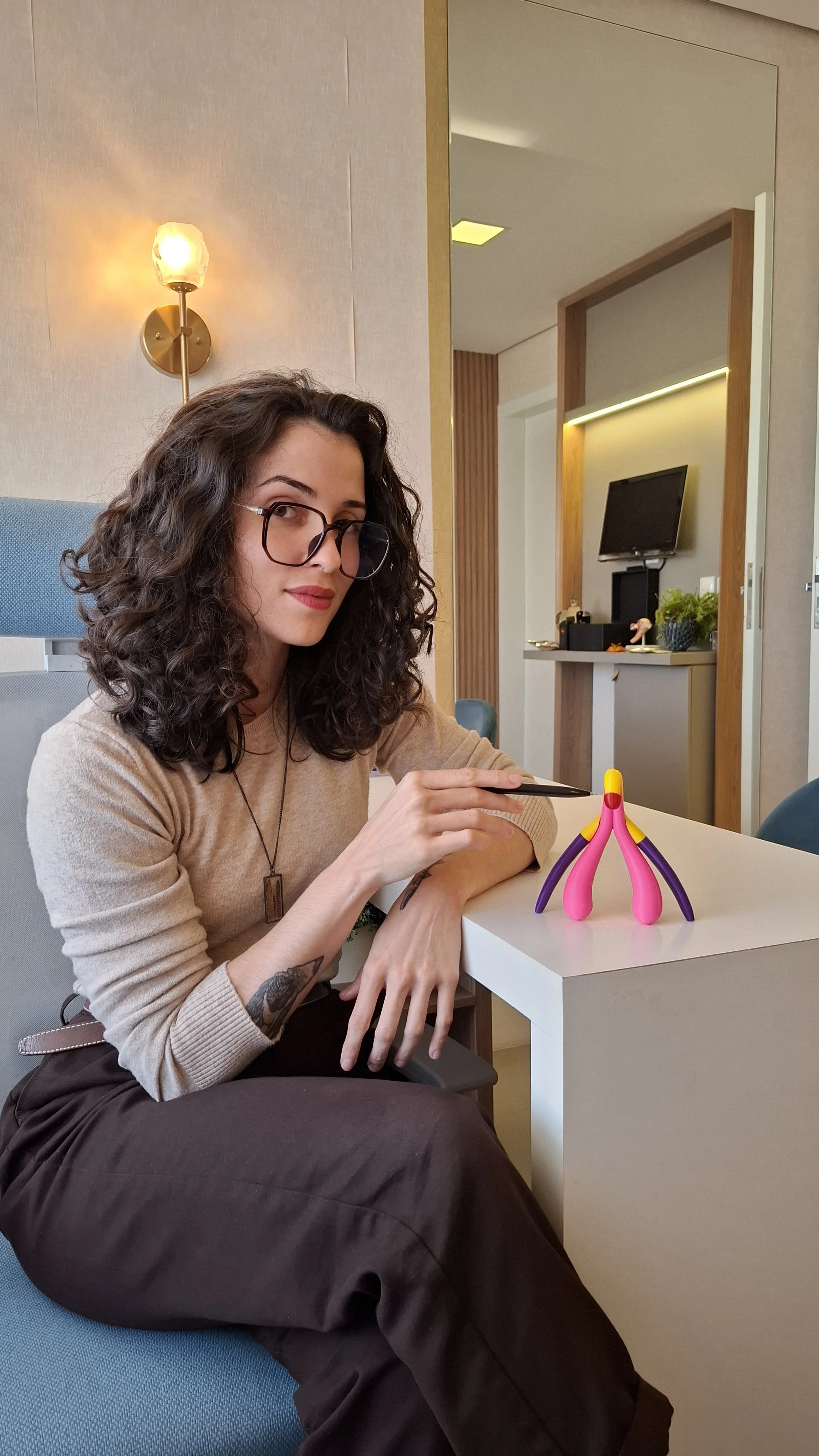
“Strap-ons are a big deal in our community, and we need to know how to use them, how to care for them, and how to make sure this toy is a source of pleasure rather than infection or discomfort. So let’s get started: you’ll find strap-ons made from a variety of materials on the market (porous and non-porous), and how you care for them will depend on what they’re made of. The most commonly used material in sex toys is medical-grade silicone, a material that is safe, hypoallergenic, and works well with water-based lubricants. When people ask me where to start, I always recommend choosing the smallest size with as little texture as possible to avoid pain or discomfort during penetration. As you venture further into the world of strap-ons, you may feel more comfortable experimenting with different sizes, shapes, and textures. At first, if you’ve never used one before, it might feel a bit uncomfortable, but with patience and relaxation, that feeling soon passes and the experience becomes quite pleasurable. For this to happen, you and your partner need to be on the same page so that your time together is respected and doesn’t turn into a bad experience. Another topic we can’t overlook is choosing the right harness. Generally speaking, there are two types: comfortable panties and briefs versus very attractive (and sometimes uncomfortable) harnesses. So, we know there’s a lot of movement when using a strap-on, so comfort is essential! If you decide to use a harness, make sure the buckles don’t scratch your skin and that the material doesn’t cause chafing! Ideally, it’s important to use a condom if you’re using a strap-on, and always change it when you switch positions or partners! Finally, NEVER store your sex toy sealed in a plastic bag. That’s a surefire way to turn it into a breeding ground for bacteria and fungi. Wash it with soap and water, let it air dry at room temperature, and store it in a small box or cloth pouch. Long live the strap-on!”
4. How does sex change (practically and emotionally) for women who are post-hysterectomy, on testosterone, or navigating menopause?
Is the lesbian community talking about this enough?

“Absolutely not! There are many taboos surrounding discussions about our sexuality, but talking about the physical changes that affect our sexuality goes far beyond that, and that’s why it’s even more often silenced. Women who are in perimenopause, using testosterone, or have had their ovaries removed (which are responsible for our production of sex steroids) may notice a significant change in the condition of the vulva and vaginal lubrication, for example. This can have a direct physical impact, such as a feeling of dryness and aesthetic changes in the area. And these changes don’t come alone. Many people interpret this as a sign of aging, a loss of “expiration date,” or even, during intimate contact, as if there were no longer any interest in the partnership (due to difficulty with lubrication during an intimate moment, for example).”
5. “Lesbian bed death”: cultural myth, statistical reality, or a concept that was always a little bit homophobic?

“Well, here’s the story: In the 80s, a large-scale scientific study was conducted to assess the sex lives of north-american couples. At the time, the news that circulated was that lesbian couples reported having sex less frequently than other couples. However, over the years, several methodological flaws were pointed out, and right off the bat, we can question the very concept they had of sex, right? You see, various sexual practices are considered sex by us LGBTQIA+ people, which isn’t going to align with the “basic and cisheterosexual” definition of sex in the 1980s, you know? The reality is that it’s common, and even kinda expected, for couples (regardless of sexual orientation) in long-term relationships to notice a decrease in sexual frequency over time, but at the same time, an improvement in the quality of sex. Yes! After all, we spend more time with that same person and end up learning what works and what doesn’t (sexually speaking). It takes intention for sex to happen in a long-term relationship. We can’t just sit back and wait for something to magically happen! Girl, we have to go for it!”
6. For trans lesbians and their partners, what does affirming, safe sex look like, and how should that conversation evolve past the clinical?

“You know, I still notice that there’s a lot of transphobic language within the lesbian community, we gotta be honest about this. Especially when we talk about sexual practices. Well, we don’t typically fall in love or feel initially attracted to each other’s genitals, right? Imagine what dating apps would be like if that were the case (hello, Grindr). We all have a “sexual history” and preferences for certain specific sexual practices. When you’re in a relationship with a trans person, there may come a moment when you realize that, in that context, the sexual practice will be different due to this or that factor. And the truth is… when isn’t it? With every new person we get involved with, we experience new and different things. Why would this scenario be an exception? Of course, sometimes specific precautions will be necessary, such as contraception, so it’s important to seek information from reliable sources or a healthcare professional. Ultimately, open communication about your fears, desires, and boundaries is essential. And it’s okay to feel like you don’t quite know what you’re doing, cause sex should be fun, not a source of anxiety!”
7. What does "good sex" mean when neither partner has a refractory period and theoretically you could go all night? Is that a blessing or a curse?

“Hahaha, I consider that one hell of a blessing. It would be sad if we wanted more and one of the people involved physically couldn’t keep up... we’d end up in a stalemate (not that that’s necessarily a bad thing, haha). But yes, the main limiting factor that keeps us from having a sex marathon every time we have sex is physical exhaustion, not our ability to arouse each other and potentially have orgasms all night long. So if we don’t have a “finish line,” how do we determine that the sex was good? Well, that can mean different things to the same person over the course of their life. Good sex can be sex full of naughtiness, even if there’s no orgasm. Just as romantic, soul-connecting sex with an intense orgasm can be equally good.”
“Good sex is the kind we want to have more often.”
8. How do you approach sex ed and safety conversations with queer women who sleep with other women but don't identify as lesbian — bi women, queer women, fluid women?
Is “lesbian sex" even the right frame?

“I think that’s why we’ve increasingly been using terms like “sapphic” to refer to relationships between women, without limiting the term specifically to sexual orientation. There’s no one-size-fits-all approach to sex education. All guidance on STI prevention and sexual health in general should be tailored to that person’s sexual practices (yes, we need to get into the details to know the best way to care for them!). Assuming that a person engages in a certain type of sexual practice based on their sexual orientation is a great way to reinforce stereotypes and miss an opportunity to provide adequate care.”
9. Queer women have been giving each other orgasms since the dawn of time with zero instruction manual… but if we did have a manual, what would you put as rule/lesson number one?

“Masturbate! Get to know your own body first.”
“When we do that, we learn the rhythm, intensity, and amount of time we need to have an orgasm. And people don’t come with instruction manuals, so how are you going to teach her what feels good to you if you don’t know yourself? When you know what feels good to you, you pass that knowledge on to your partner, and she'll feel more confident knowing that you’ll tell her if it feels good or not. Besides teaching her how to give you pleasure, she’ll feel like a great sexual partner.”