

“MATERNITY, MORALITY, AND MENTALITY: THE REPRESENTATION OF LAURA BROWN IN THE HOURS.”
BY CARRIS LAKE (SHE/HER)
@carris.mae

ARTIST BIO:
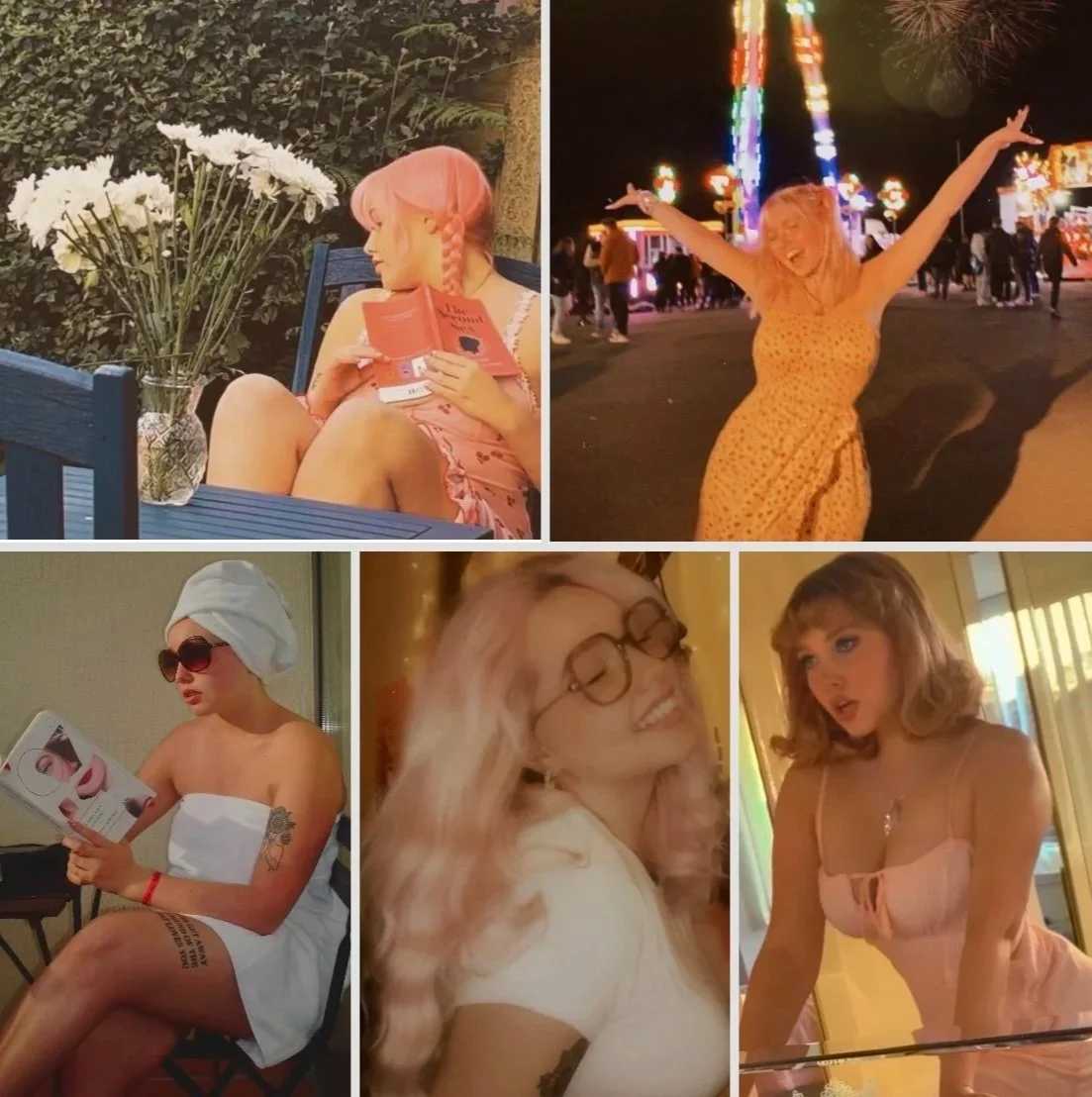
“I’m an English Literature scholar at York St John University. My academia explores socio-political literary theory in its connection to feminism, the womb, and lesbianism. Principally, I am a passionate creative writer and poet! My work is grounded in a commitment to amplifying marginalised voices and challenging dominant culture. My research surrounding 1950s-70s housewife culture and heteronormative complacency is ongoing and I am looking to gain further insights through this opportunity. I am looking to taking my work into likeminded considerations and make lifelong creative connections with other queer women!”
Tell us a bit about the piece you're submitting! (Why did you write it, inspiration, why it's important etc.)*
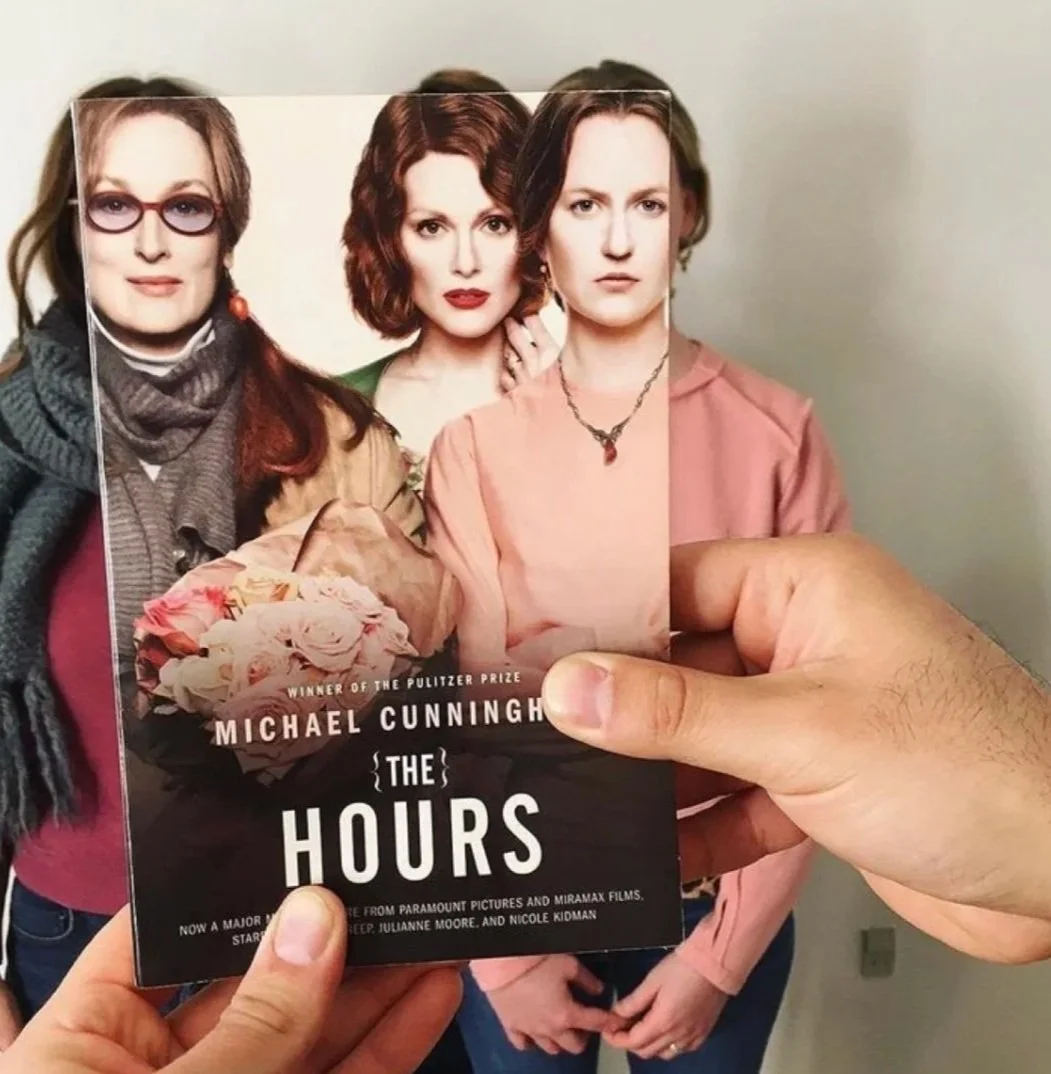
I wrote this piece purely after watching Stephen Daldry's 'The Hours' for the first time. It is a book by Michael Cunningham, made into film. It features Nicole Kidman as the sexually deviant and psychologically distressed Virginia Woolf, Julianne Moore as bored, homo-curious housewife Laura Brown and Meryl Streep as the New York, high-flying, lesbian Clarissa Dalloway.
Sexuality, motherhood, mental health, changing societal norms and the despair of womanhood is all at play here, and I couldn't stop thinking about it all afterwards. Upon conversations with fellow lesbian friends, we discussed how incredibly deeply-rooted heteronormativity is in lesbian identity, and the way in which this stems from 1950s housewifery and complacency. Here, I just had to write about Laura Brown!
Maternity, Mortality, and Mentality: The representation of Laura Brown in The Hours.
Carris Lake
‘Laura Zielski, the solitary girl, the incessant reader, is gone, and here in her place is Laura Brown.’ (Cunningham 40). Zielski, a name of Polish origin, derived from translations of herbs and grass, land and greenery. Brown, meaning brown, derived from someone who embodies the colour brown, through their hair, eyes, or clothes. Cunningham has concocted her, not as the foreign, idiosyncratic, solitary Zielski, not even as the individualistic Laura, but as Mrs. Brown. At the heading of her chapter, we are not introduced to Laura, but to Mrs. Brown - Laura encaged in her honorific as a wife, and Zielski rotted, dried up, underwatered, mudded in the brown earth, once grass green. Laura Brown is arguably the only truly ‘fictional’ protagonist in Cunningham’s The Hours; we cannot disprove Virginia Woolf’s existence, and Clarissa Vaughn’s seed was planted in the wind that shook Clarissa Dalloway’s flower. Laura, situated in between the bread of these two women’s timelines, is a ‘middle man.’ A Winston Smith; an everyone; a representation of society. Stephen Daldry, in the film adaptation of The Hours, casts Julianne Moore, a natural redhead with brown eyes, intentionally darkening her hair to an earthy brown and covering her in brown clothes. She is Mrs. Brown, in every sense except emotionally. Within this essay, I will place cynosure upon Mrs. Brown, exploring the ways in which Michael Cunningham’s 1998 novel The Hours, and Stephen Daldry’s 2002 adaptation of the same name, presents hetero-domesticity through maternity, mortality, and mentality.
In Daldry’s The Hours, Dan Brown is downstairs, opening and closing cupboards senselessly. (Daldry 13:08). I suggest that Daldry has modified Cunningham’s narrative with this scene to outwardly visualise Dan’s lack of knowledge within domestic tasks - in this instance, finding which cupboard groceries are kept to be able to make their son’s breakfast. It is evident that Laura Brown is the ‘homemaker,’ establishing her placement within the domesticity of the relationship and her figure as a woman in the 1950s. The repeated opening of cupboards, although brief, is frustrating. Daldry’s adaptation within the scene visualises a metaphor for the repetitive, disorganised nature of the relationship, and furthermore the oblivion that Dan possesses towards Laura’s turmoil. This concept subsists within Laura Brown’s desire to ‘make up for breakfast by baking Dan a perfect birthday cake.’ (Cunningham 38). Cunningham interestingly repeats the adjective ‘perfect,’ to measure Laura’s worth and identity as a housewife to a standard of unattainability, placing pressure upon her roles and responsibilities. ‘Before Laura realizes that she must kill "the angel in the house," she tries to fulfill what she conceives of as her "wifely" and "motherly" duties.’ (Spengler 62). Following Spengler’s interpretations, I would like to bring attention to references around ‘the angel in the house.’ The perfect cake is just one example of Laura’s domesticity, followed by her unnerving reactions to being left alone with her child, as Cunningham writes that: ‘when her husband is there, she can manage it. She can see him seeing her, and she knows almost instinctively how to treat the boy.’ (Cunningham 47). Her maternal status is hereby a simple act that goes hand-in-hand with her placement as a housewife and a domestically submissive angel in the house. Her performance as an angel is consistently referenced within The Hours: ‘She is standing in the wings, about to go on stage and perform for a play in which she is not appropriately dressed and for which she has not adequately rehearsed.’ (Cunningham 43), of which I highlight that she stands in the ‘wings’ to be a double entendre, in the implication of both theatre wings and angel wings. Even as a contemporary reader, I believe that Cunningham has curated a beautifully sympathetic situation in the character of Laura Brown, as she is incredibly representative of all women subjected to roles of a hetero-domestic expectation that limits their abilities to follow any other desires. ‘Laura's emotional involvement demonstrates that the cake becomes the creative task that identifies her as yet another artist figure. Completely absorbed in her task of creating the perfect cake, Laura compares her own occupation with that of a writer, painter, or architect.’ (Spengler 62). Daldry’s adaptation explores this further, using the production of the cake to envision Laura’s responsibilities. ‘We are baking this cake to show him that we love him. Otherwise he won’t know we love him? That’s right.’ (Daldry 42:05). Laura here upholds aforementioned ‘angel in the house’ values; her artistic desires to bake may lie in the obscurity of her pauses and thoughtful facial expressions, but in acting conversation with her son, her actions are for the sole materialistic performance of her husband. Daldry’s decision to leave Laura’s creative tendencies in the obscurity of this scene creates somewhat of a metaphorical notion - her desires and talents are suppressed into the unspoken backgrounds. After all, ‘it is far harder to kill a phantom than a reality.’ (Woolf 60).
Opposing Cunningham’s structure containing partitioned chapters describing each character’s awakening in a separated length, in Daldry’s structural direction, Virginia Woolf and Clarissa Dalloway have awoken, and are up cleaning their faces in the same 60 seconds of clip that Laura Brown first wakes up. (Daldry 12:05-13:05). Daldry combines the ladies’ arousal in such short divisions to signify that Laura Brown has no desire to begin her day, especially in comparison to her congenerics. Daldry places these chapters of the women’s morning routine in such a close and fast proximity to one another in a likely adaptation to convey Brown’s inner monologue; to interpret her abstraction that she ‘should be out of bed, showered and dressed, fixing breakfast for Dan and Richie.’ (Cunningham 38). ‘ When Virginia Woolf lays on the ground to stare into the black eyes of a dead bird, and that bird transcends into the emotionally dead Laura Brown, we know we're in the presence of two characters in search of an author, not a film editor.’ (Cardullo 672). Bert Cardullo previously suggests that ‘Laura Brown may be closer to Woolf's Mrs. Dalloway than the contemporary Clarissa of New York, and she may even be somewhat more of a refraction of Woolf herself.’ (Cardullo 671). In response to Cardullo’s exegesis, I pay attention to Laura Brown’s inability to begin her day in a traditional, face-washing, productive sense, which winds Laura to connotations of mopery and depression, as a refraction of Woolf’s poor mental wellbeing. Cunningham continuously references water and drowning within the initial descriptions of Laura Brown’s mentality and actions: ‘She has been taken by a wave of feeling, a sea-swell, that rises from under her breast and buoys hers.’ After reading another extract from Mrs Dalloway, Laura attempts to close the book, but feels as though ‘she were about to dive into cold water.’ (Cunningham 40-41). Embodying Cardullo’s suggestion, Laura’s thoughts, feelings and actions are swimming in the river that drowns Virginia Woolf. Although Stephen Daldry’s film adaptation may lose important inner monologues and descriptions included within the book, he ensures to embrace them in cinematic forms. Losing references to water in the ‘waking scene,’ he incorporates them later on. Virginia Woolf is deciding whether or not to instruct her protagonist to commit suicide, whilst simultaneously, Laura Brown looks at bottles of pills, before her hotel room floods with water. (Daldry 1:26). It is only once Woolf makes her decision that Brown awakes with an epiphany that she should not die. Daldry hereby indicates that Woolf is writing Mrs. Brown’s fate, placing Laura on the same puppet-strings as Clarissa Dalloway, whilst using drowning, as opposed to pills, to place her as an embodiment of Woolf’s suicidal mortality.
The Hours can be linked to notions of second wave feminism in more manners than can be listed within this essay, therefore I wish to place inspection on the particular notion of Laura’s lack of sexual desire in correlation to Betty Friedman’s The Feminine Mystique. Women in 1950s America wanted only to be ‘perfect housewives and mothers… their only fight to keep their husbands… Occupation: housewife.’ (Friedman 18). Laura Brown’s personal sexual politics are verbalised within the concluding sections of her day, in which she looks in the mirror before getting into bed with her husband. She is aware that Dan will want to have sex with her that night, and she furthermore dissociates herself from her body in a subconscious attempt to ‘[not play] any particular part beyond being that of the willing observer.’ (Cunningham 215). Her irritation towards Dan’s sexual compulsions are representative of her own detachment from her sexuality and her inability to allow herself genuine connection and sexual fulfillment within her relationship with her husband. Reading her as an ‘everyone’ character within a 1950s context, her sexuality is merely a duty within her role as a wife - her matrimony and maternity coexist, and neither of which could exist without her sexual submissions to Dan, regardless of pleasure involved. Kitty’s arrival at the Brown household disrupts the matrimonious and maternal orders and duties through what can be contextualised as a sexual revolution - a sexuality that ‘was not exclusively reproductive, and that was extricated from the institution of marriage.’ (Alain). In the film adaptation, Laura urges Kitty to ‘forget about Ray, just forget about him,’ (Daldry 50:21), before kissing her with a passion that Daldry never even attempts to execute between Laura and Dan. Laura recalls ‘the child, the cake, the kiss. It got down, somehow to those three elements’ (Cunningham 142). Kate Haey suggests in reference to this quotation that ‘while both "the child" and "the cake" are related to the continuance of an identity over time, the kiss becomes a representation for the power of the moment.’ (Haey 151). The nature of the kiss is hereby symbolic of connection and desire, and both of the women’s momentary power to rebel against their marriage. Haey continues to liaise the women’s
heterosexual inescapability to that of their maternity: ‘Laura is faced with a woman whose domesticity seems to be eortless. When Kitty confesses to Laura that she has to go into the hospital because of a tumor on her uterus, Kitty's façade too seems to slip away… They are each impersonating someone.’ (Haey 151). It is interesting that Cunningham writes Kitty’s tumor to be uterine as opposed to elsewhere within her body, as it suggests that her illnesses lie within her maternal capacities. Her desire for a child where she cannot conceive, in connection to Laura’s desire for freedom from motherhood whilst pregnant, alludes to the connection in their sexual deviance lying within the bosom of: ‘is this all?’ (Friedman 15).
Both Daldry and Cunningham explore Laura’s mental health in correlation to her maternity. Laura Brown is a character who struggles with the unspoken aspects of motherhood and mental health, and Daldry’s inability to verbalise even her thoughts through his cinema heightens this complexity. He presents Laura with a suburban sepia hue, in vulnerable positions and longing facial expressions. Michael Cunningham writes Laura to face significant challenges in terms of her maternity: ‘she can’t always remember how a mother would act.’ (Cunningham 47). Although unspoken until the concluding pages, readers know through portals to Laura’s internal dialogue that she is condemned to her role as a mother, and wishes to escape for solitude - where in which she drops her son, Richie, o to stay at a neighbours house, allowing her some time away from her responsibilities as a maternal figure. Daldry adroitly emphasises Laura’s pregnancy within this scene. In the moments that she has ‘alone,’ reading in the hotel room, Daldry directs Laura Brown to rub her belly. Minutes later, she disregards the book, and is lost deep in thought, all the while exposing her bare, pregnant stomach. (Daldry 1:25-1:26). Daldry’s presentation of the exposed stomach is an invite to our focus on Laura’s fertility; this is a reminder of her role as a mother, and the suocating, absorbing, burdening inescapability of it. Her desire for independence, sexual freedom, artistic desires and a lack of expectation is at a tension with her reality as a constrained mother and wife, encapsulated by her unborn baby, with her even in times of solitude. Her pregnancy makes her vulnerable, used often as an excuse for the exacerbation of her psychological distress. ‘Because she is pregnant, she is allowed these lapses. She is allowed, for now, to read unreasonably, to linger in bed, to cry or grow furious over nothing.’ (Cunningham 38). Historically, ‘hysteria’ has been linked to the womb, or the ‘hystera,’ and has been, in summary, the cause of women’s unfulfillment and lack of gratitude for their domesticity. It is no doubt that the womb aects women’s psychology, as studies have proven time and time again that the menstrual cycle causes peaks and falls in hormones that aect thought and action; nevertheless, women have found comfort in the liberation that comes alongside the uncomfortable nods and sympathetic dismissals that men allow during hormonal change. In The Yellow Wallpaper, the narrator expresses a tense moment with her husband when he dismisses her mental distress: "Really dear you are better!" "Better in body perhaps –" I began, and stopped short, for he sat up straight and looked at me with such a stern, reproachful look that I could not say another word." (Gilman 14). This interaction highlights the protagonist's inability to openly discuss her mental health, forcing her instead to retreat into an inner monologue about how changes in her body - through menstruation, pregnancy, and early motherhood - aect her cognitive functioning. Similarly, in Cunningham's The Hours, Laura Brown's husband, Dan, exhibits paternal attitudes toward his wife’s state of mind: “[Laura] needs to rest. He pats her belly carefully but with certain force, as if it were the shell of a soft-boiled egg.” (Cunningham 45). His gentle handling of her suggests a concern for her physical fragility, yet it overlooks any deeper emotional or mental struggles she might be facing. A comparable situation occurs with Virginia Woolf, whose husband Leonard takes her away to rest in the countryside, ostensibly to help her recover. In each case, these men are shown caring for their wives, albeit in ways that focus more on their physical or menstrual health and perceived fragility than on their mental health. At first, these gestures may appear genuinely supportive, but upon reading Arlie Hochschild’s The Second Shi, a more troubling picture emerges. Hochschild discusses how many women, burdened with the “second shift” of unpaid domestic labor, often report feeling “burned out” and “emotionally numb,” exhausted by the demands of both work and home life. (Hochschild 45). This reveals that the husbands’ concern—while often framed as care for their wives—may actually be motivated by a desire to ensure that their wives remain physically well enough to fulfill their roles as mothers and homemakers. The husbands’ attentiveness, then, while seemingly protective, is ultimately shaped by a broader societal expectation that women’s primary function is to care for others. This reinforces the mental and emotional strain on women, further complicating their ability to openly express and address their mental health needs.
In conclusion, both Michael Cunningham's The Hours and Stephen Daldry's film adaptation portray Laura Brown as a complex figure, caught between societal expectations of motherhood and the silent struggles of her mental health. Laura's identity is shaped by the oppressive roles of her placement as a wife and a mother, which stifle her desires for independence, creativity, and sexual fulfillment. The depiction of Laura’s internal conflict, amplified by Daldry’s cinematic choices and Cunningham’s writing, highlights the suocating weight of domesticity and the unspoken burden of maternal duty. In exploring these themes, The Hours not only critiques the heteronormative ideals of 1950s domestic life, but also invites reflection on the enduring struggle for women’s autonomy over both their minds and bodies.
WORKS CITED
Cardullo, Bert. “Art and Matter.” The Hudson Review, vol. 56, no. 4, 2004, p. 669, https://doi.org/10.2307/3852966. Accessed 18 Nov. 2020.
Cunningham, Michael. The Hours. 1999. Harper Perennial, 2006.
Daldry, Stephen. “The Hours.” Paramount Pictures, 23 June 2003.
Friedan, Betty. The Feminine Mystique. 1963, pp. 15–32,
nationalhumanitiescenter.org/ows/seminars/tcentury/FeminineMystique.pdf.
Giami, Alain. “Sexual Liberation and Sexual Revolutions.” Encyclopédie D’histoire Numérique de L’Europe, 23 June 2020,
ehne.fr/en/encyclopedia/themes/gender-and-europe/demographic-transition-sexual-revolutions/se xual-liberation-and-sexual-revolutions.
Gilman, Charlotte Perkins. The Yellow Wallpaper. The New England Magazine, 1892.
Haffey, Kate. “Exquisite Moments and the Temporality of the Kiss in ‘Mrs. Dalloway’ and ‘The Hours.’” Narrative, vol. 18, no. 2, 2010, pp. 137–62, www.jstor.org/stable/40856405.
Hochschild, Arlie Russell. The Second Shift: Working Parents and the Revolution at Home. Penguin Books, 1989.
Patmore, Coventry. “The Angel in the House, by Coventry Patmore.” Gutenberg.org, 1854, www.gutenberg.org/files/4099/4099-h/4099-h.htm.
Spengler, Birgit. “Michael Cunningham Rewriting Virginia Woolf: Pragmatist vs. Modernist Aesthetics.” Woolf Studies Annual, vol. 10, 2004, pp. 51–79, www.jstor.org/stable/24906503.
Woolf, Virginia. Killing the Angel in the House: Seven Essays. Penguin Books, 1995.