

- a look into the south asian queer community
By Ayesha
Publishing by Mel
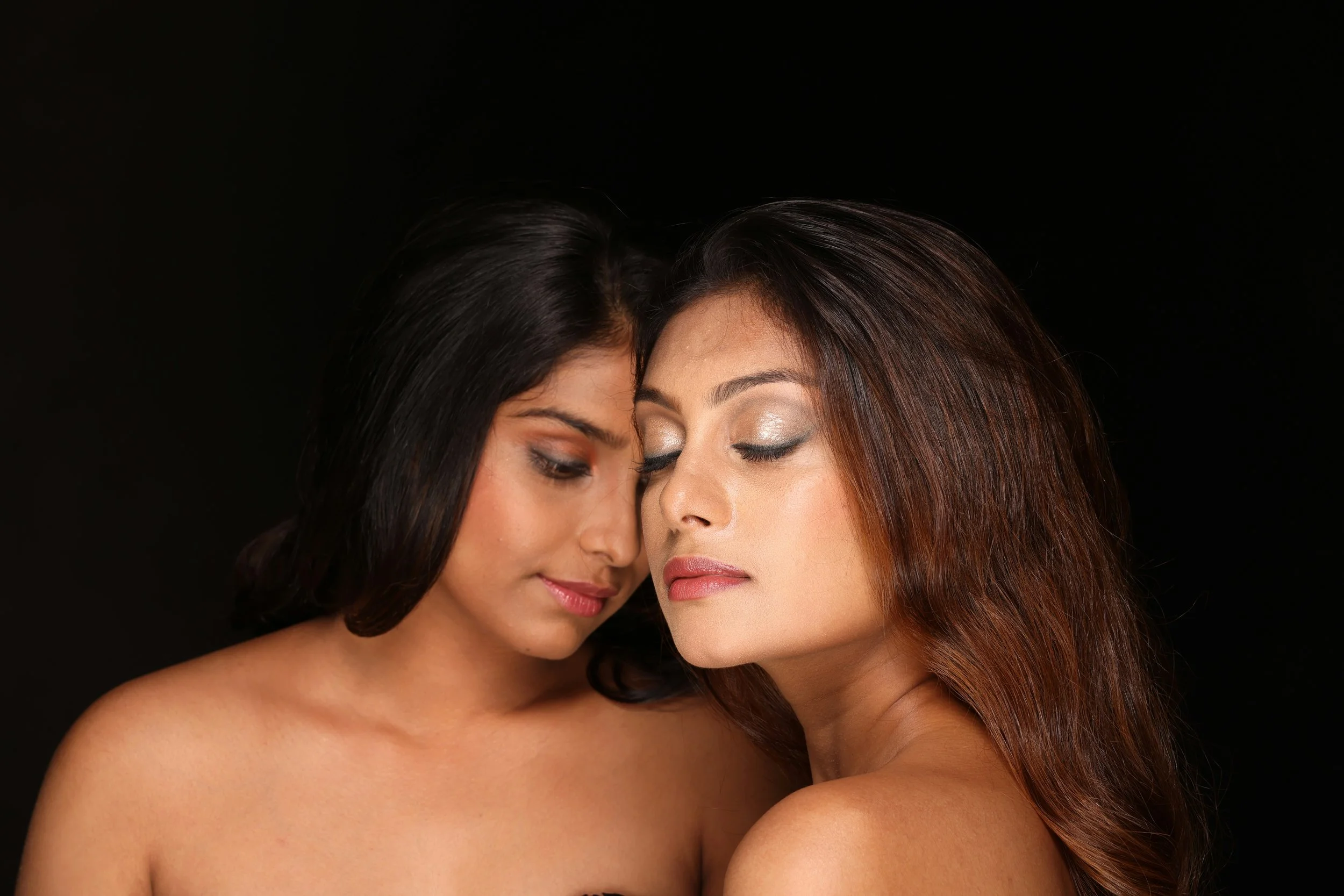
Credits: dras koli
“I think I like girls”, my best friend in Year 6 told me as we stood in the playground, specifically between the basketball court and the jungle gym (a relatively quiet and private place). I still giggle to myself when I remember I responded with -
“You can do that!”
I admit that at the time, I had no idea gay people existed, pushing off the butterflies I felt in my stomach when I saw Deepika Padukone and Anne Hathaway as idealisation. Growing up in an exclusively muslim and south asian household, the word “gay” did not exist. People, especially girls, grow up, gain some kind of education, marry and have kids. Their kids do the same, and theirs, sandwiched in between, are trips to the mosque and “back home” to remind ourselves that this life is fleeting. Life is full of these requirements we follow to pass the time. Fickle things like love, identity and change are Western thoughts that threaten to corrupt us in the night. Going against the grain was a fairy tale with a heeded warning, told to kids as a precaution. You can do it, but there is a cost. Yet here I am, a lesbian south asian muslim; I still exist. I did not blow up in flames when I first kissed my partner, and I do not have the devil whispering in my ear when we lie in bed together, no matter how much I was told this would be the case. And I am not alone in this. I interviewed four other queer people in similar circumstances, with the overarching idea tailored throughout: “What does it mean to be queer to you?”
Buzzwords that have popped out from my interviewees on the South Asian queer experience range from ‘loneliness’, detailed by Anonymous, a 23-year-old international student, to empowering, emphasised with the music of Roza, a Manchester-based musician (check out Misery Guts). While saying this, one thing that came up throughout every conversation I had was the overarching dark cloud that surrounds all topics associated with south asian culture, the impact of colonialism, or, as Anonymous puts it, the ‘colonial hangover’.
The colonialism of South Asia has been a topic I am unfortunately well-versed in because of my academic background exclusively in it and my own personal family history. Despite this, I find conversations around it to be, frankly, annoying. We, as south asians, are told in detail why our culture is the way it is, down to the laws and the pompous names of the lords who laid them out. But this also means we never really know how things were before. This is strikingly true with the connection between queer identities within south asians. I could go on about how, before the 1800s, sexuality in India, in particular, was vibrant, alive and celebrated, but once again, frustrating news to hear. Abi, a recent history and politics graduate, shared this frustration: ‘Hindu identity and culture have echoes of colonialism,’ she admitted to me. Moreover, Roza acknowledged to me that queer people have always existed, but we are forced into a bubble of colonial thought. And what is this colonial thought, might you ask? Well, it's the idea of complying, restricting yourself, and abiding by cultural standards. Fulfilling these duties means that not only are you staying safe, but you are also fitting in with the rest of society, and you are accepted. As a consequence, choosing not to comply, to express yourself and question culture as south asian queer people do, leads to complicated consequences.
These consequences have largely formed around self-identification with my interviewees, with Fen, a Sri Lankan immigrant living in Britain, struggling to balance her merging identities and their queerness. The culture you gain is, of course, generational; your parents had it and their parents, so it begins in your family. However, when queerness is not discussed, when it's ingrained in your homeland as a taboo, it's not accepted or understood. You are alone in the battle of figuring out what your culture is and how your sexuality fits into that, because there are no role models. There is no aunt who lives solely with her female roommate who can give you sage gay advice. As Fen says, being a queer south asian has a level of detachment from what you have been taught, so you can live the life you want to live. That's not easy as well. As Roza argues, the more you stray away from the binary, the more exposed you are to danger, making your safe little closeted bubble very homely indeed. However, once you finally accept this part of yourself, adapt to the cultural changes it brings, and feel somewhat vindicated, another boss battle emerges—the predominantly white lesbian community.
Don’t get me wrong, my fellow dykes. I love ya - shout out to my white American girlfriend, but all of my interviewees have agreed that it is almost impossible to connect with someone whose whiteness has informed their experience. This level of privilege and recognition is not understood by south asian women or queer individuals, creating a sometimes exclusionary atmosphere as Roza describes. This majority white space can make all the work put into discovering and accepting your sexuality a small hurdle compared to the loneliness embedded in the community you were thrilled to discover. Not only that, there is, unfortunately, a deep-rooted sense of misogyny still in the lesbian community. With Abi recalling that due to their masculine presentation, she has often been turned into the ‘man’ of the relationship, diminishing their femininity to the closed and male-centred perspectives that should not be in our community. On the other hand, Anonymous managed to travel to India and experience the gay community there, a space which was different to the once white-dominated queer spaces. In their travels, Anonymous recalled happily how there was a strong sense of acceptance around them, with queer people in India developing alongside the society they were in rather than being outcasts to it. Obviously, however, this is not always the case in south asian countries, and as Anonymous themselves admit, change can be very scary. With all this in mind, you can't help but wonder: is being openly queer as a south asian person truly worth it? Of course it is; I am not leaving this paragraph with that question, but stick with me.
All four of my lovely interviewees unanimously agreed on one thing, and that was: no matter what the circumstances were or the struggles they experienced, they would never change anything about themselves. While they stumbled and forged their own basis of being south asian, their culture, values and religion stayed deep in their hearts because eventually you learn, through yourself or the people around you, that you can exist, that you are not an anomaly. Being a queer person is not a choice or something we decide to do every morning; it's a way of being. As said by Rad, it makes sense, but it doesn't encapsulate everything about you. Eventually, as Fen told me, you have to move on from just surviving and start to actually live, finding ways to be yourself and grow as an individual, in both a queer and asian world. There is a level of courage in everyday life that is surrounded by support that you can find, with Roza being grateful for her chosen family and Abi relying on her online communities. Your existence being a rebellion can be exhausting, isolating and disastrous, but at the same time, the freest you have ever felt in your life. Most importantly, as all these individuals stated, you owe your younger self, who grew up with tiffin boxes, shalwar kameez and weddings, the gayest life that they could ever dream of.