
AGONY AUNT!
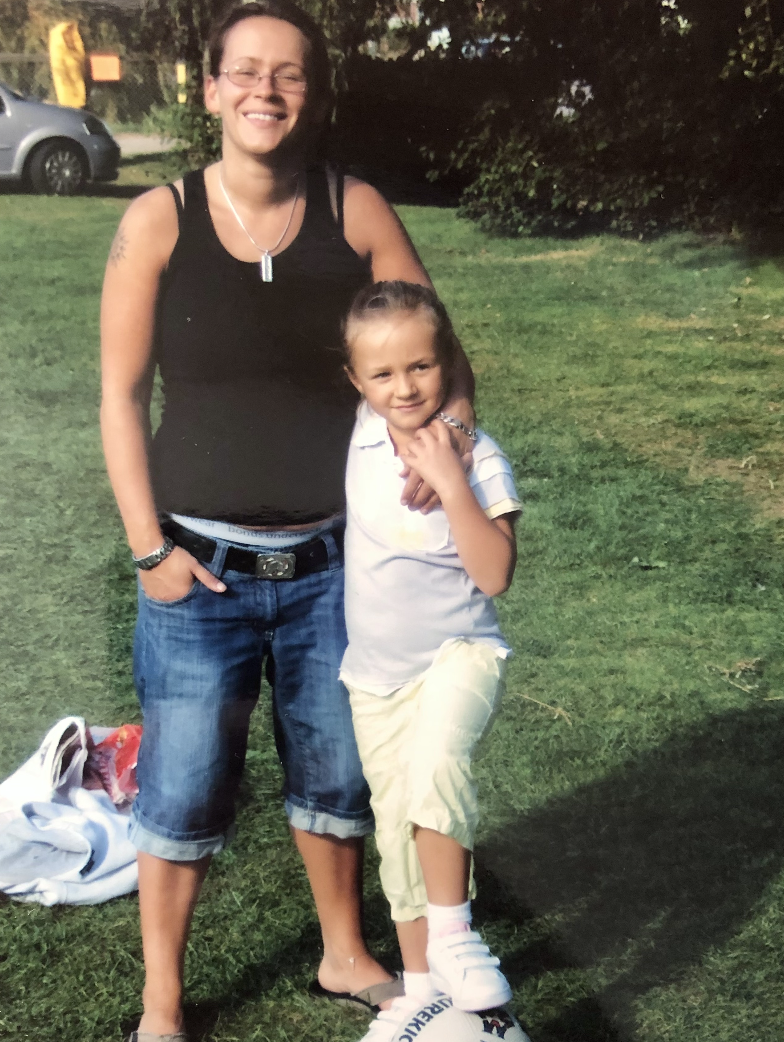
INTRODUCING: kate ashton.
dirty dykes very own agony aunt.
Helping You Navigate Love, Lust, and L Word-Level Chaos.
Hi I’m Kate Ashton, a recently trained counsellor with seven years’ experience in the mental health field.
On my eighth birthday I ditched all of my friends to spend the entire afternoon with Alison - my older sister’s friend - eating sweets and basking in that warm fuzzy glow you get when a girl you adore notices you exist.
I didn’t have the words, but I knew then that I was a massive lesbian.
In the decades since, my sexuality and gender expression have always felt inseparable from who I am as a human being. I developed an interest in how that intersects with neurodivergence, class and mental health, which led to my studying to be a counsellor.
I am parent to a fully grown lesbian and aunt to a tribe of mostly LGBT+ niblings who give me immense joy - both because of who they are and because my homophobic parents having mostly queer grandchildren will never not be delightful!
this weeks questions:
-
Hello! The first thing that came to mind on reading this is that you are absolutely not alone in this fear! It’s perfectly human to feel like this. Venturing into new spaces is hard. We’re creatures of habit (humans, not lesbians specifically. although…), when you’ve grown up in straight society, lesbian spaces likely feel very different. Your nervous system has no idea whether it’s different bad or different good only that it’s new, and new rings alarm bells. Not to mention the fact that the more important something is to us - and finding a community is so important - the more we are likely to feel anxious about it going wrong, so we can put a lot of pressure on ourselves to get everything right. Knowing this is not in itself a solution, but, noticing what’s happening for you and allowing it as part of the process can ease the pressure a little.
I get that you’re scared. The fact that you’ve asked the question and that you’re wanting to figure this out though, that’s pretty brave. When we decide that something is more important than our fear, amazing things happen.
Look for lesbian spaces that incorporate things you either already like doing or where you can learn about something that interests you. Volunteering is always a good option too - you’ll have a specific role, which can ease the social pressure. Lesbians are wonderful community builders, and you are gonna find or create one that is just right for you.
-
Oh that’s so rubbish I’m so sorry you’re experiencing this. People you consider to be friends trying to tell you who you are or aren’t is disheartening.
To be absolutely clear, there is no such thing as “not lesbian enough”. Your identity is not up for debate. There’s no rules or checklist, and whether you are butch, femme, somewhere in between, whether you play rugby or yearn to be a 1950s style housewife, none of that dictates your sexual orientation.
Often people who do this are speaking from a place of their own insecurities, or just have very small-minded views about what a lesbian should be. But whether it comes from internalised misogyny, a lack of understanding about the glorious diversity within our community or just some sort of weird gatekeeping, it is no reflection on you. You know who you are. Their ill-informed opinions have no bearing on the validity of your experience or how you identify.
If you want you can say something like “My sexuality isn’t up for discussion. I know who I am and I would appreciate it if you respected that.” Or, “That’s actually quite a hurtful thing to say.” (or if you wanted to go down a slightly seedier route you can respond with “That’s not what your mum said last night!”) Either way you do not owe anyone an explanation. If these friends are important to you then maybe open up a conversation about the diversity within the lesbian community, but remember it isn’t your job to educate anyone.
The best antidote to this kind of negativity is to surround yourself with people who celebrate you for who you are; seek out friends who build you up and adore you for who you are not try to squash you into a narrowly-defined box.
And remember bab, your identity is not negotiable. You keep shining, you beautiful lesbian you!
-
This is such a difficult position to be in as a friend. The fact that this is worrying you shows how much you care about both the friendship and for your friend’s wellbeing.
In terms of actions you can take I’m afraid the options are rather limited. The choices our loved ones make in love are rarely something we can have much influence over, and often our attempts to point out issues can backfire and result in us being the ones pushed away.
It can also be quite draining to watch someone you love repeatedly being hurt or manipulated and feeling helpless to change it. So first and foremost, look after yourself! Do the things you know keep you well and maintain or grow the other friendships and relationships in your life.
There are some more subtle ways though that you can help your friend. Try not to bring in your own judgements about the relationship as much as possible; we all make questionable choices when it comes to love, try to maintain an open and empathetic attitude towards your friend’s situation. Chances are if this relationship is not right for her she will see that eventually and learn and grow from the experience – often we need to learn what isn’t acceptable in order to find what we truly want. It is okay to voice concerns, but do so gently, in a moment when your friend is receptive, and trust that saying it once is enough. If possible, don’t distance yourself from her. Good friends can be a lifeline and can make all the difference in whether or not someone feels able to leave a shitty relationship. Listen and be there for her (to the extent that you are able while looking after your own wellbeing!)
And lastly, be her biggest cheerleader. Remind her of who she is, what she loves, what she’s good at, what brings her joy. The more secure we are in our own values and our own worth the harder it is for anyone to manipulate us, and there is enormous value in having friends who bring us back to ourselves when we drift away from that.
-
How lovely that you and your girlfriend have found new friends together! It's totally understandable that navigating this feels a bit tricky. Boundaries in new friendships can be complex, and it's doubly so when there are four of you involved, all building a connection at once.
Feeling confused about the lines between platonic and romantic love is very common. We often associate deep intimacy and connection solely with romance, but the start of a new friendship can feel just as intense! The fact that this is a friendship you and your girlfriend are building from the ground up, rather than with pre-existing individual friends, adds an extra layer of intimacy to the dynamic.
Your observation about being chattier in the group simply indicates your enthusiasm and delight at meeting people who truly "get" you. The joy of mutual understanding, shared interests, and the sense of building a broader support system can feel deeply loving, connecting, and intimate without ever needing to be romantic. Your relationship with your girlfriend, on the other hand, likely has a unique blend of mental, emotional, and physical intimacy; in this new dynamic, you are each other's primary anchor. The fear you've expressed, around how quickly this new friendship is becoming so important, is completely valid. It likely stems from a natural instinct to protect your primary relationship, and it's a clear indication of how deeply you value what you have.
I think the most important thing here is to communicate openly with your girlfriend about how you are feeling. Talk about how you've both noticed being chattier, discuss how that feels, and share your thoughts on how intense this new friendship feels. Be honest about your hopes and any fears you might have. Knowing where each other is at will make this new dynamic feel less risky and more manageable. Also, make sure to make time for the "us" that is just the two of you, whether it's date nights, cooking together, or having those big, deep chats about your future. This helps maintain your solid foundation.
This experience is a wonderful opportunity to deepen your connection with your girlfriend while simultaneously building a rich, interconnected queer life. While some fear and trepidation are completely understandable, try not to let that overshadow the genuine enrichment these new connections bring. Tend to the garden of your primary relationship, but don't be afraid of leaning into the joy and delight that these new friends are bringing. They could be a source of immense comfort, fun, and shared experiences for years to come, and a supportive queer community is truly invaluable! Keep talking with your girlfriend, and trust that together you will navigate this beautifully.
-
Hello! Thanks for your question. Firstly, big reassurance that you do not in any way sound creepy or predatory. And, honestly? Ask her out!
The best way to avoid creepy vibes is to be clear and direct, and to be respectful of whatever answer she gives you.
Something like: “Hey (her name). That morning at the beach was chaotic, but I had fun walking down with you and (friend’s name). I’ve seen you since in (shared module) and have been meaning to ask you out. Would you be up for grabbing coffee or a drink sometime when we’re both a bit more coherent?!”
This acknowledges the drunk elephant in the room in a lighthearted way, shows that you’ve noticed her, and puts the ball in her court for a casual no-pressure date. Asking someone out is scary af but you’ve totally got this. Good luck!