“ If We Don’t Laugh, We’ll Cry”
By Lily Mae & Alessandra Grifi
Publishing by Mel
Credit: Alicia Fretter
Tell us a bit about you and the work you do.
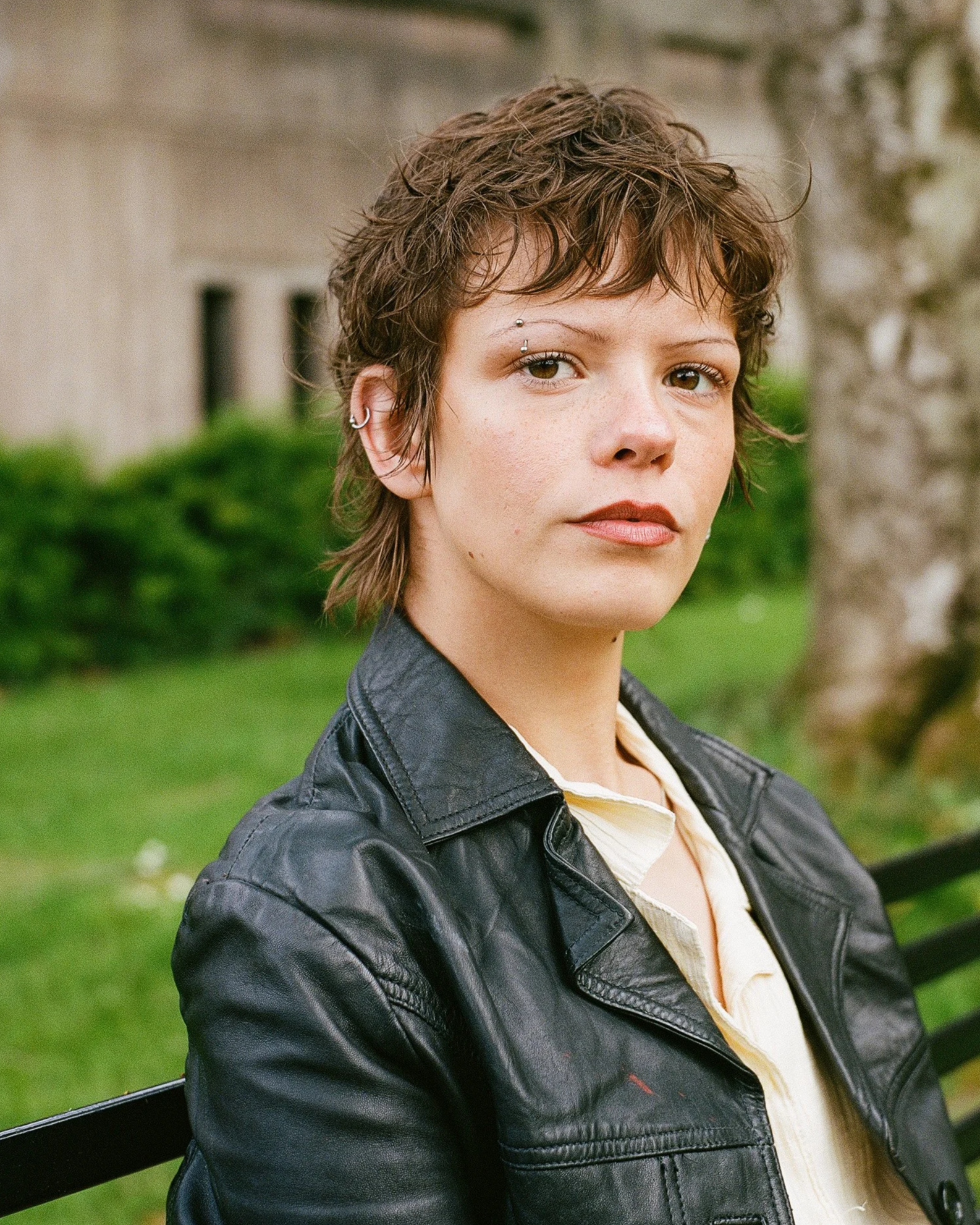
So, I am a multi-disciplinary artist with a background in contemporary theatre and creative direction. So far, I primarily work in photography and printmaking but moving slowly into sculpture and fine art realms. I am also half of ‘if we don’t laugh, we’ll cry’, a podcast project that aims to normalise the conversation around grief through shared experience, humour and conversation. We're slowly moving into the physical space with the podcast too, through events, live panel talks, workshops and exhibition/art events across the UK that aim to bring people closer and navigate complex conversations around grief through togetherness.
I hope we do more this summer too! I primarily work on events and social media management with the podcast, and in my spare time, I blend what I learn in therapy, what I learn through conversation, things that come up during podcast recordings, I then translate them into stories, collages, prints, photography series, films, and sculptures that resonate with me and my journey. So that's what I do now, and I'm slowly developing my practice by experimenting with sculpture and exhibition curation, which I'm super excited about.
What is the origin of the ‘if we don’t laugh we’ll cry’ podcast?
The origin of the 'if we don’t laugh, we’ll cry’ podcast stems from when my sister, Amie, and I lost our mum in 2017 when I was 16 and she was 20, to a sudden death. We didn't speak about it for the first four or five years of our grief. We kind of got on with it in our own ways, and we were just growing up and trying to navigate it as young people. One day, we sat in a park together, we spoke about it for hours and just went through all the stories we’d suppressed and the funniest most random parts of grief and the alienation feelings that nobody really talks about. The relief that we felt was otherworldly and almost instant, we saw our relationship start to mend and felt our nervous systems relax into the conversation. So, we started to understand that if we can do this and get to this point, we can really help other people if we try and encourage them to do the same with their friends, their families, and their loved ones.
After both feeling so isolated from the world and having barely any authentic resources to reach out for, nobody our age talking about it, and nothing that didn’t feel clinical or intimidating, we decided to create it ourselves. On one hand, it was a way for Amie and I to have scheduled time to grieve together, whether it be like alone or on camera, you know, time for us to sit down and talk about it, to help ourselves acknowledge our traumas, while in turn, helping other people, which was a no-brainer for us.
As well as that, Amie and I are both, you know, trying to grow our own careers in heavily dominated creative industries that are really hard to break into, and we come from an extremely working-class background where we had no money, we couldn't afford hobbies, we couldn't afford to indulge in any sort of culture or technology, really. So now, we're also using this platform to try to pave our own way into the industry. Sometimes it’s necessary for people to pave out their our own space in the photography, film and TV industry as the late-stage capitalist structures that we’re in right now are not really built for working-class people with
complex mental health experiences and needs. So yeah, that's the honest truth as to why we started the if we don’t laugh, we’ll cry podcast and it's crazy how it's gone so far.
How has the podcast affected your relationship with grief?
My relationship with grief is hard to put into words anyway. What is my relationship with grief? It's a relationship I never asked for, for one, but it's something that I have to have a relationship with, I have no choice, it's something that happened to me and the podcast was a way to kind of stop suppressing that relationship, to bring it into my present world. Amie and I both lost our mum, then moved to Manchester and sort of tried to forget it and pretend it didn't happen, until we couldn't anymore, and then we started talking about it, which is crazy to think about now, but it was a way for us to bring that into our real world and speak it out loud and into existence rather than just in our bodies.
It was a way for us to learn to self-soothe and to accept what had happened and to stop suppressing it. It's been a hard journey. We’ve been doing the podcast for about 2 or 3 years now, and to begin with we were pretty clueless, we had barely spoken about grief. So from there to where we are now is crazy, we're both completely different people, we have got completely different coping mechanisms and ways of being, thinking, and seeing that we didn't have before, we're definitely growing on screen with you guys, which is, you know, the beauty of it all, like it's completely authentic. We're not, you know, claiming to be professionals, we are growing on camera and learning about our grief alongside our audience, and that's all we ever wanted to do. So now we're in a better place where we can separate work and grief, and come to terms with that grey area between our traumas being something that we live with and something that we now also work with. Overall, we are on an upward trajectory in our healing journeys.
The podcast has definitely amplified that for me and helped me create a third party perspective on my trauma, to begin to see it for what it is rather than for what I thought it was, which was just completely, you know, thwarted and suppressed by complex emotions, undiagnosed autism/ADHD, and C-PTSD. I now have quite a holistic view of grief which I am forever grateful for.
When did you start expressing your grief through creativity and how did that happen?
I started expressing my grief through my creativity at university really, when I had moved out of the house and town that my trauma was attached to, and had given myself some space to process. I was at uni from 2019 to 2022, so two years after I lost mum and throughout the whole of lockdown, which is, you know, just my luck. That sort of environment: not being able to go outside, only being surrounded by my uni projects and my grief, whilst not being able to go anywhere or do anything with it, meant that they all sort of started merging into one and I started to use my grief as fuel for my creative projects. I thought about basically killing two birds with one stone and sort of trying to do them in tandem almost, because I couldn’t really run from them anymore.
I’d say the first creative grief project was in first year, a monologue piece that we had to do to camera for one of our first performance modules, because we were in lockdown, and I decided to change it into a short film project. I picked up a camera and adopted a directorial position and that's sort of how it happened. I felt really connected with myself, I felt connected with my past (the theatre kid in me) my future (what I could be, where I could go). The child that lost her mum and the adult that I was at that time started to merge into one being and I enjoyed that feeling. That passion that was ignited in me came from the challenge of translating emotions into stories, but it allowed me to also start to converse with people about how I am feeling. I started learning about symbolism and representation and from then on I began to really enjoy navigating autobiographical emotions through my practice. It really meant that everything started to make sense.
How would you describe the connection between your work, creativity and grief?
It's a hard one to put into words. It’s all very heavily connected and all stems from each other and overlaps in my brain. It’s a timestamp really. My art has always kind of been a time stamp that links directly to where I am in my life in that moment of creation. It's all autobiographical somewhere down the line, and if you look deeply into it, it will really reflect what I'm learning in therapy at the time or what I'm going through very quite deeply. My personal/environmental experiences and my darkest fears and deepest feelings are plastered everywhere within all of my projects. I try and use the creative part of me to try and learn to not be afraid of the darkness that can arise with my grief and mental health, to not be fearful of complex feelings, but to see it as an artistic and emotional challenge to get to the bottom of. I’ve always been a huge fan of horror, of avant garde surrealism, expressionism, abstract narrations of detailed emotions, so it all makes sense really. I try to use my art as, almost a therapy journal and I hope to look back on it one day and just see my whole journey, who I am, and my growth as a person from a child, to a child who lost her mum, to an adult, to an adult who's lost her mum, right in front of me. And I think that's beautiful and I think it's amazing.
Um, art in general has all been the biggest lifeline for me. I mean, music was the one thing that, that got both my sister and I through those really hard times in our early stages of grief. Music, film, tv, theatre, literature, poetry are constants in my life that I can always refer back to. Music especially helps me relate to people on an emotional level in regards to my queerness and gender fluidity. Even the times of like complete chaos and heightened emotional states, we always put music on
and it always grounded us. It is now an outlet that helps me see the future more clearly. It helps me move forward and see what I could be. In times where I feel all encompassed by my grief, I can look back on the events that we've produced, I can see the work that we've put out and I can see that I can in fact achieve things, even if I can't feel it now. So it's, it's just a reminder for me of who I am and where I’ve come from, like all of my art is therapy in some way, even production work. I
hope in creating all of this art and this work, that it can resonate with someone, at least one person. So yeah, that’s my goal.
How has creativity been an outlet for you amidst grief?
It’s just a complete outlet for me. Anything that I learn in therapy, I translate into scribbles. My creative voice and my production brain is the one thing that helps me develop a third party perspective. I can then see each therapy session as a
project and regain my agency within the experience, whilst being able to see what happened to me as a fully realised event, developing empathy and understanding that that is me, that is my life. I can say that this is how it makes me feel and this is how I am, you know, this is what feelings come up, this is what my needs are. And
as an autistic person with CPTSD anyway, it's so challenging to grieve and to understand my emotions because I live so much of my life in my head. It's just a way for me to get what's out in my head out into the real world so that I can start feeling it and placing identity on those emotions, and then, from that, developing it into an art piece which in-turn develops an overarching empathetic voice and a self-soothing attitude. The blending of art and grief helps me look after myself better as I can get to the root of things and understand them on a really deep level, from both my perspective and from the perspective of the outside world or the viewer. I’m completely grateful for all of these aspects of myself- my grief, my autism, my ADHD, my queerness, my working-class identity, my Serbian heritage it’s all connected.
What is your creative process like (for instance, do you start with an idea or let it flow)?
So my creative process is chaotic to say the least, but it's all rooted in understanding my identity. It may stem from a line that I hear in a song or a film, or something that someone has said to me or that I have said in therapy, maybe a nightmare that I had or a feeling that I had on a down day where I missed mum. I’ll write all of this down in my notes app. Yeah, my notes app is just madness and it's just full of ideas and random scribbles. I'll then try to go into my creative producer brain to sit down start to translate it into either a drawing for a print, or a film idea or a photoshoot concept. I’ll start to be able to place the role of the audience in that concept, and that helps me to develop a third party perspective on my trauma so I can self-soothe and understand my C-PTSD when I am activated. It’s called mentalisation. When doing this, I’ll try not to limit any ideas and put no time limits on the session whether it be 10 seconds or 8 hours. I'll revisit the same idea over a couple of weeks and I'll just let it flow naturally as I unpack it in therapy. I'll see how it grows and see how my relationship grows with it and then I will, you know, I'll finalise pre-production from that and start proper production. This is often for photography shoots or film ideas, and especially for printmaking as I love to use one-liners.
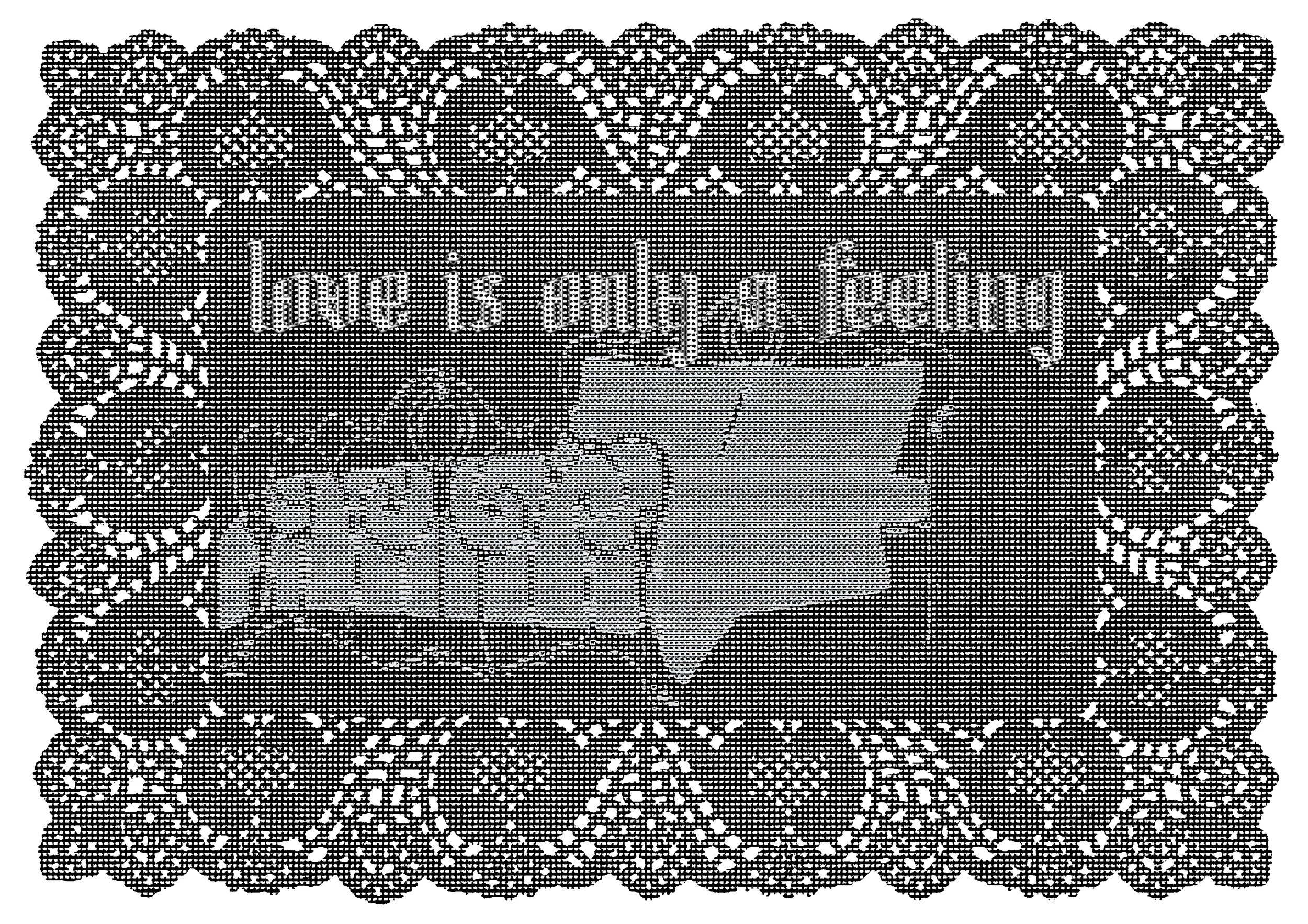
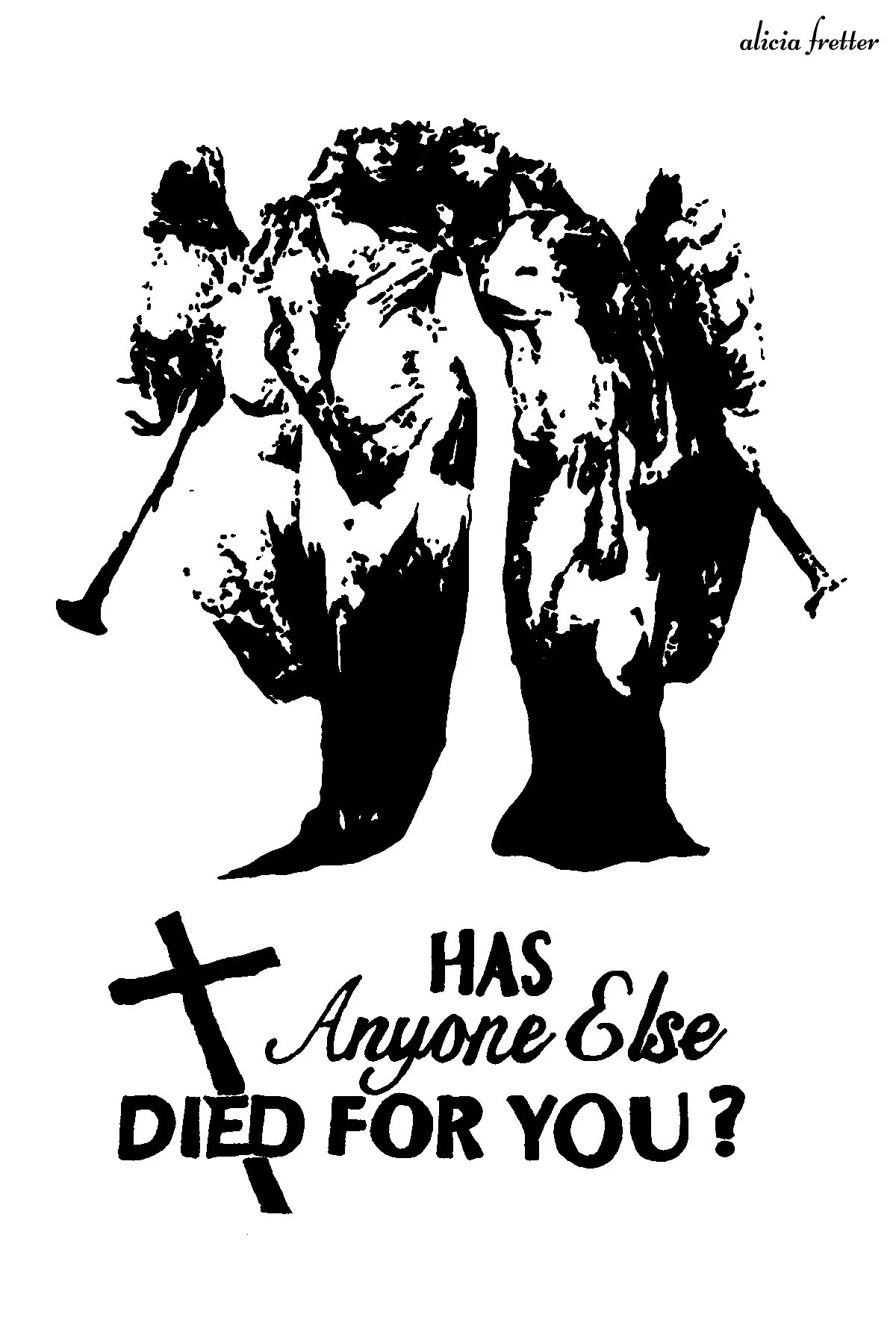
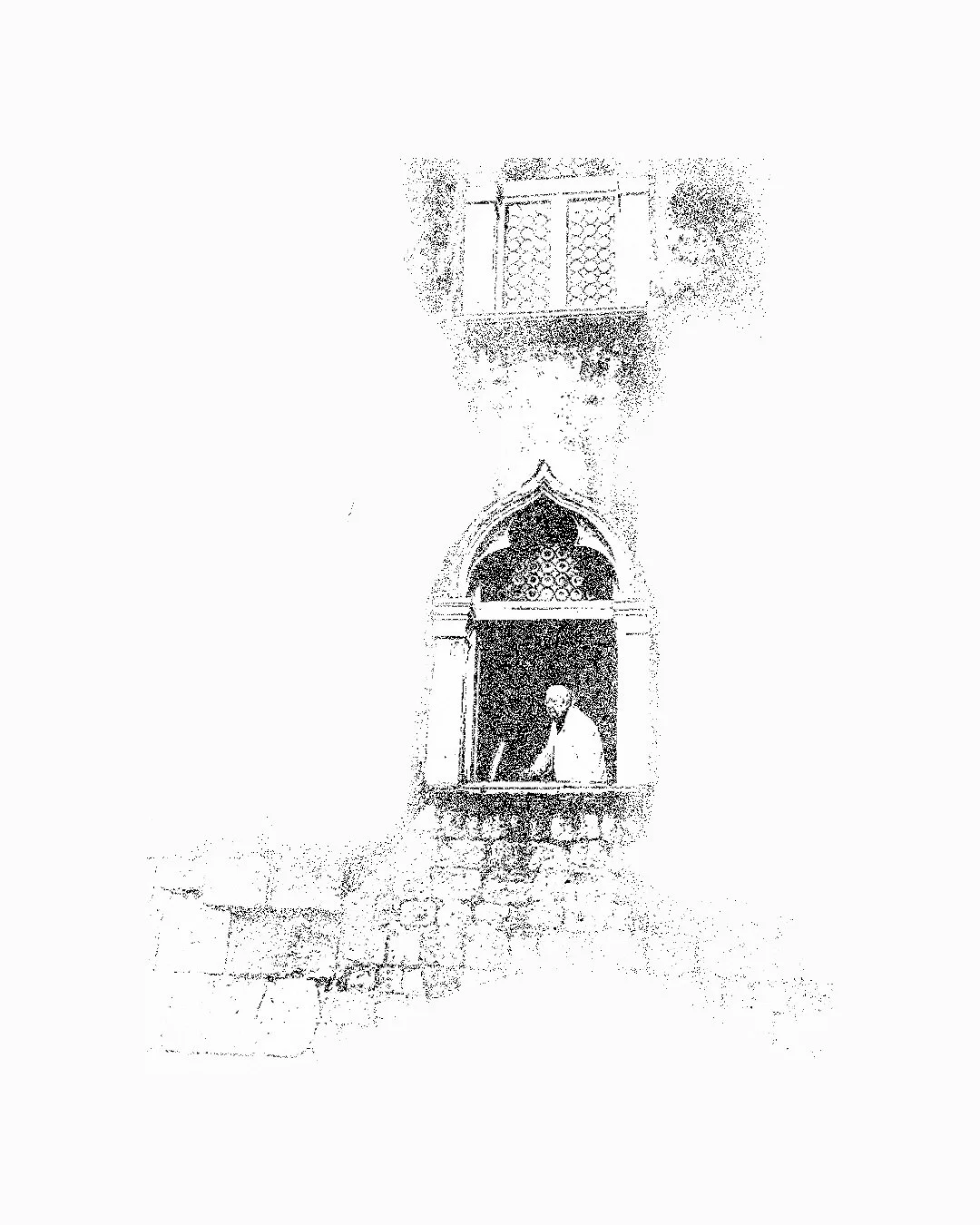
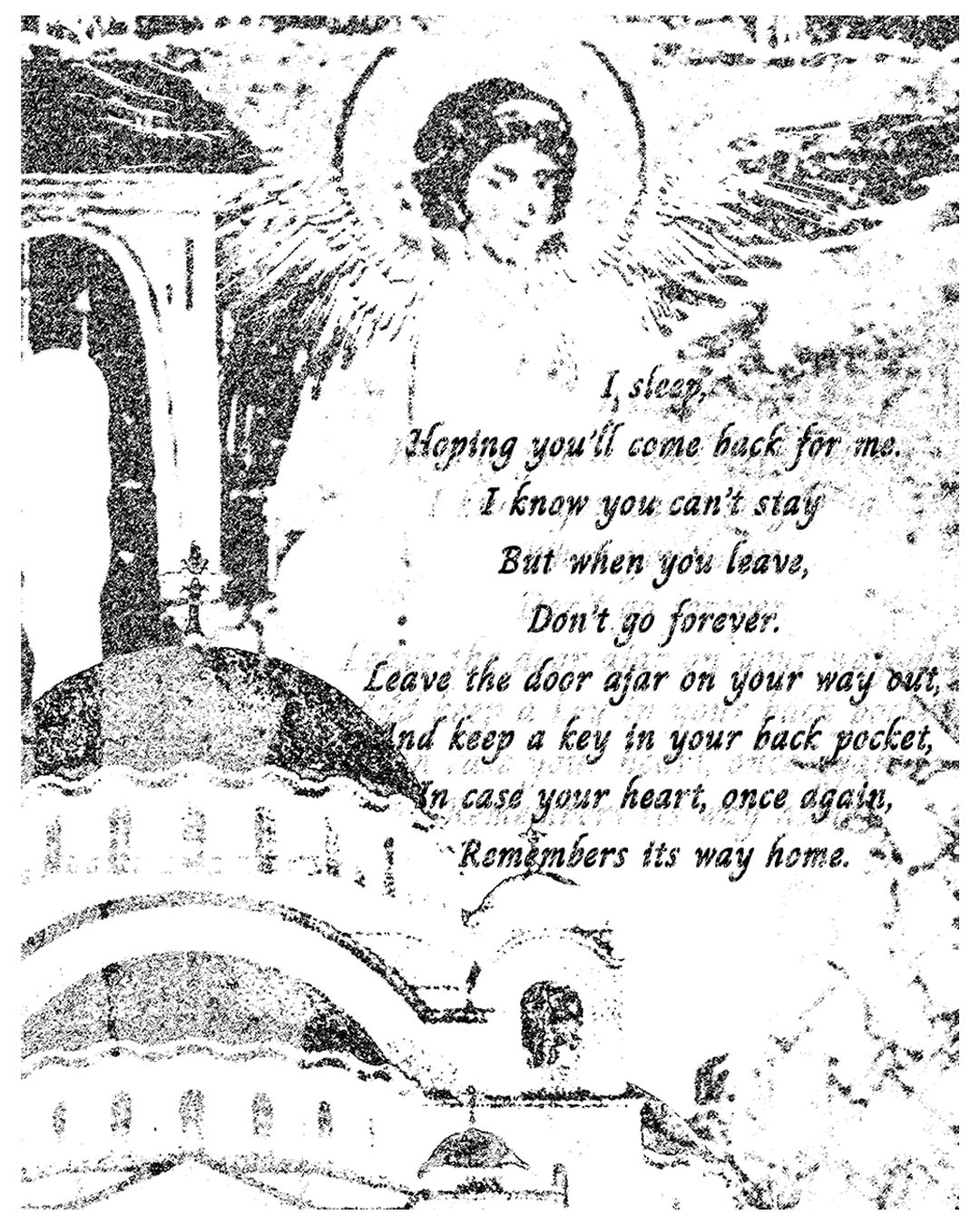
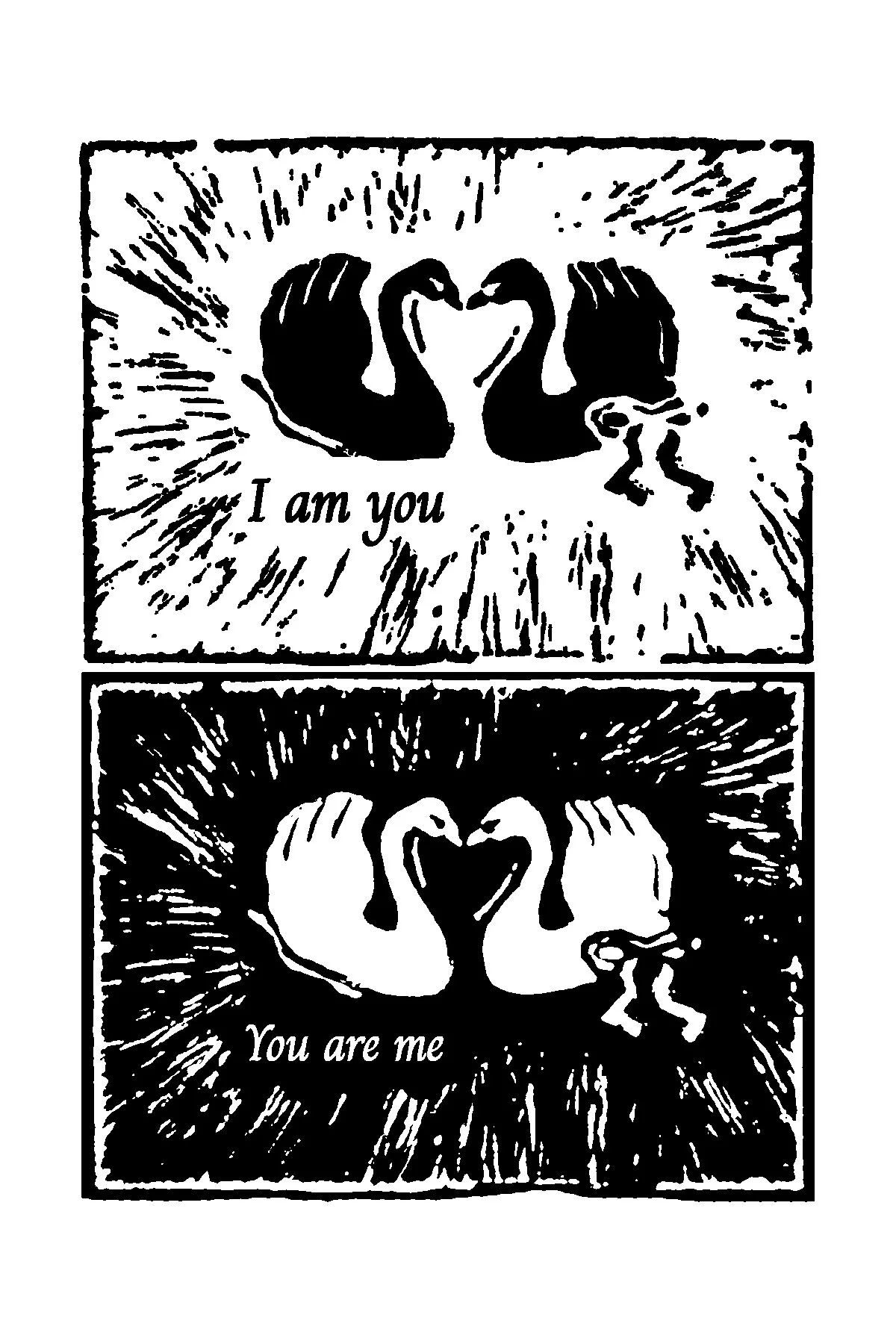
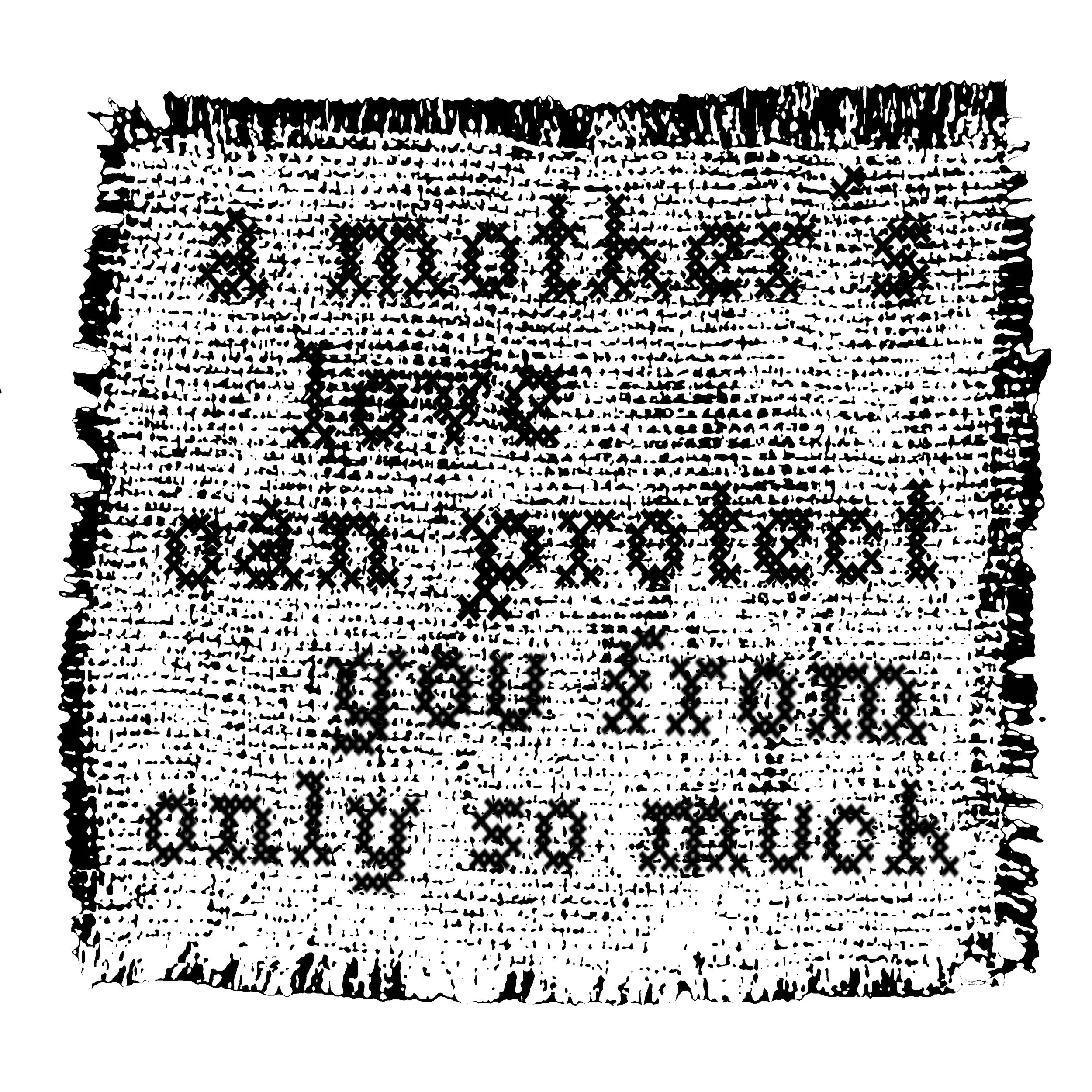
This process is completely visible in some of my recent stuff, such as ‘love is only a feeling’ and ‘a mothers love can protect you from only so much’, two print designs that stemmed from learning the hard truth that love can be transactional, as well as learning how to self-soothe when realising that mum’s role was to protect me, but she can not protect me from her own death. That second one is also one of my favourite Cleo Sol lines. Her music has helped me so much for so long, especially her album, Mother, which me and my friends listened to on a drive down to London to see our friends theatre show, a few months before her passing in 2022. Again, I just see it all as a time stamp as to where I’m at. I hope to remember that drive in 50 years when I look at that print.
More recently, I’ve started to use my heritage as stimuli, to try and redevelop my autobiographical voice that I sometimes feel I have lost when using lines from songs. I’m trying to make things a bit more 3-dimensional. I’m half Serbian, and I feel like a lot of my Serbian heritage that was gifted to me by my mother’s bloodline was lost in her passing. I have been visiting Eastern Europe to try and gather a more holistic connection to my family’s cultural and religious background, to try and connect my present self with my past and acknowledge my grief deeper. A lot of my work that I am developing at the moment is stemming from this, which I’m really excited about, but can’t reveal too much! What I can say is that, right now, I’m researching Serbian folklore and the rituals within it. I am finding that they are very much rooted in embroidery, which I love instantly as I’ve always adored using grains and textures from materials graphically anyway. These rituals are often very much linked to motherhood and embroidering specific symbols into clothing and rugs were ways for mothers to protect their children from evil across generations. It’s so interesting and feels connected to my work in so many ways already.
Has your experience of ‘sculpting your grief’ changed over time?
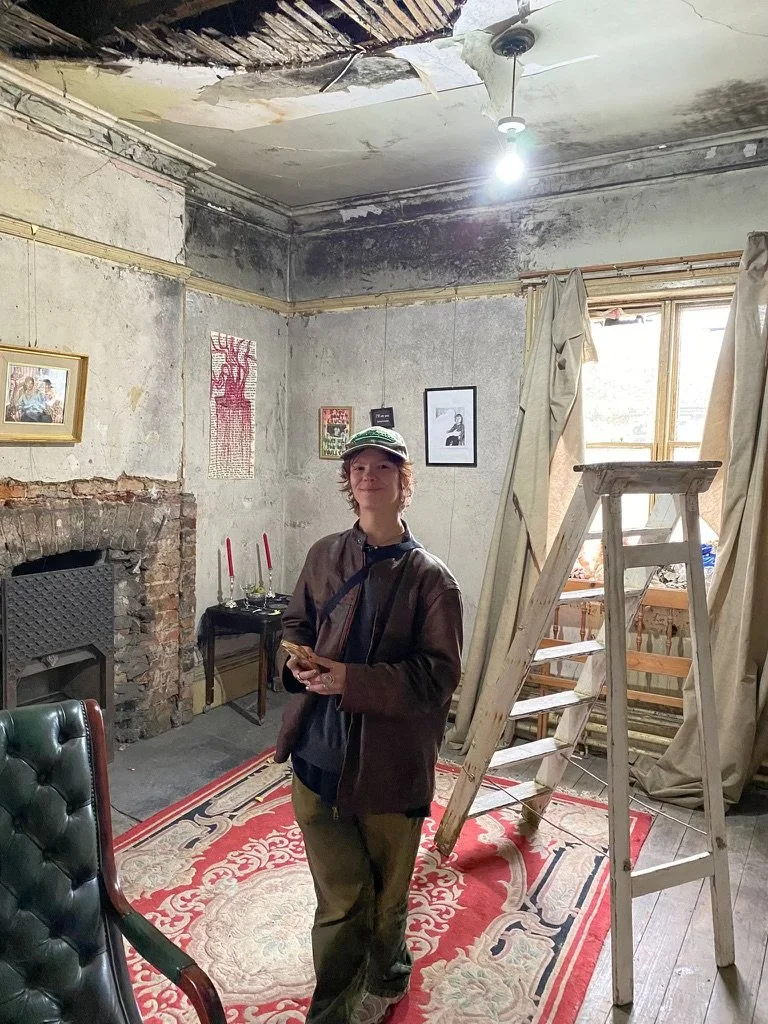
Yes, 100%. I feel like now I'm finally getting to a point where I can delve deeper into my grief and what it means in ways that make my art less… on the nose? It’s more, I don't know, complex and three-dimensional as I'm understanding suppressed emotions within my grief. So yeah, I 100% think that it's changed over time. I started when I was 16 and I'm 25 now, so the growth there is major anyway. I’m completely different as a person, but I try to use my art as a way of reconnecting with that child that I lost and the teenage-hood I missed out on. As an artist, it's definitely changed over time. I'm starting to reclaim the agency that I have in it, like I am creating this piece because I'm a grieving person and I want to understand my feelings.
I'm not succumbing to my grief, I’m no longer an artist who was 18 and drowning in feelings and trying to, you know, not let it swallow me. I am now choose which aspects I want to create with, and can realise why I'm creating it and how it's going to help me move forward. So I just feel like I've gained a huge amount of agency in my work and if in my life, I feel way stronger now than I ever did. I think that's hugely down to using my art and my therapy to understand these emotions that once completely made no sense. I think that’s what you mean by ‘sculpting grief’, anyway.
How do you experience grief as a queer person?
My grief as a queer person is a weird one and it is complex for me. I slowly sort of realised that I was queer from the age of maybe nine onwards, but I came out to my family 17 onwards, which meant that I never came out to my mum. I came out to my dad. So yeah, my grief as a queer person is strange. I was really intensely figuring things out at the time when she passed away. I was 16 and I was finally almost ready to come out at that time. So I feel like losing mum was a subconscious catalyst for me coming out. I think subconsciously it taught me that there's no point in hiding. It almost shocked me into realising the limit on time that we have. I adopted an almost nihilistic attitude when learning that nothing really matters and that there's no point living inauthentically because the reality of the world is harsh and life isn't permanent. So yeah, I think that was a catalyst for me coming out. How weird is it that the worst thing that has ever happened to me became a catalyst for one of the greatest parts of my identity.
Because of this, a lot of my grief is feelings of longing about what could’ve been. I try to connect with my dreams in the hopes of understanding my nervous system and I live a lot of my life in my head. It's a very hard thing to navigate and there's so many lows and so many highs, but they're so in parallel with each other. It's also like ideas of the fact that I'm living in my house right now with my my girlfriend and my mum has never seen that part of me. I think grief as a queer person is one thing, but grief as a queer person who's lost their parent is another. And yeah, it's, it's hard. I think what I'm trying to take from all of my experiences and all of the things that I feel victim to, like how sometimes I feel victim to my identity, or victim to the state of the world, or victim to the systems that limit us, or the fact that my mum died when I was a child, or victim of my own oppression, but all of it fuels me to learn and to want to learn. It also fuels me to have to learn to survive.
What would the benefit be of having queer specific grief spaces?
I think that queer specific grief spaces are insanely important!
I have never been to one myself but that sounds like a laugh riot. Like, if we strip back to how important queer spaces are, how important working class spaces are, how important black owned spaces are, it's clearly vital for marginalised groups to have a space where they feel that they can be safe and be expressive. It’s also very clear that having specific grief spaces is important in a society that refuses to acknowledge the significance of grief. Then we acknowledge that there are many different separate cultural communities within the small percentage of grieving people who all need to feel understood and supported and connected to each other.
Why wouldn’t we introduce spaces that can allow people to speak to likeminded individuals, to share stories? Both can exist at the same time, shared grieving spaces alongside specialised spaces for specialised grief, which sounds great to me. All that it would do is introduce and encourage shared experience, community, and people healing alongside one another by talking and figuring things out. What’s so scary about that! That is also the whole point of our podcast and my practice, is to do those things. I think this conversation is very aligned with what we’re trying to do with if we don’t laugh, which is, you know, create and make room for grief spaces in normalised conversation and in the real world. So yeah, I
think any spaces that allow people to be, to feel, to authentically communicate, and to feel part of something is, yeah, pretty much the basis for everything that I believe in.
Have you consumed any songs, films, etc recently that you would recommend to someone who is grieving?
I feel like on some days grieving people want to listen and watch things that have no correlation to their own experiences, you know, I want distraction, I want escapism and entertainment. But then there's other days where I want to feel listened to, understood, I want to relate to something and to feel less alone in my feelings, so I do consume both but at my own risk. One of my favourite films is Tomboy by Céline Sciamma, it’s so beautiful. It's a French film and it sort of navigates complex gender identity but through a child's eyes and I think that it's really authentic when showing the innocence and complexity of identity. That film makes me feel connected to myself, which then makes me feel connected to my mum and my past, where I've been, who I am, and where I'm going to be. What else… About Time is my girlfriend's favourite film and we watched that recently and I, you know, probably wouldn't recommend it to someone grieving hahaha, because it's so f*****g heart-wrenching, but it's just a lovely little tale of understanding how important life is and finding peace in the mundane.
A couple of years ago, I watched this film called Perfect Days. It's a Japanese film, based in Tokyo, that sort of depicts a man's attempt to control his life and how he learns to feel content with the mundane parts of his life and the structured routine
he finds himself in. I often struggle with days that make me feel like I'm living in a Groundhog Day or that I'm going nowhere and sometimes I can't enjoy the mundane because I’m running out of time. I think that film taught me a lot about how it's absolutely okay to find myself in a routine, it's okay to get up and go to work and come home and that be it for a while. I'm not wasting my life, I'm a raging communist in a capitalist world, which makes it even harder, but to understand that I am in this world where I have to get up and I have to go to work, but through that I can find unexpected, you know, beauty. I can slow down and look around me and notice how I grateful I am for things like trees and parks and birds. It definitely helped me to begin to strip everything back and just remind myself what I'm fully grateful for and to not get lost in the noise. So yeah, I would recommend that to anyone that is struggling with feeling like they're not doing enough or they're running out of time or that they're wasting their years.
And finally, what new projects are in store for you?
So I am working, I have been working on a sort of exhibition installation idea surrounding my grief for the last couple of years. It's something that I've wanted to do since, I think second year, so about four years. I’m now really committed to it now, and I think it’s because I sort of understand who I am more as a person and as an artist that it doesn’t feel as forced. But, yeah, it’ll be somewhat of a multimedia exhibition/installation, which will span photography, sculpture, film, writing, printmaking, fine art, basically all aspects of my artistic identity and my grief identity, um, maybe even my queer identity and put it all in one space.
I want to be able to look around and be like, I have navigated all of this. I have put all of these horrible and intense feelings, that make no sense, into real-life work that is malleable. So that’s going to be a tale of the last 9 years or so, what I have learned, and I’m excited to get that going. As I said before, I’m also delving further into my heritage whilst moving further into sculpture and textile mediums to hopefully create some tapestries or experiment with materials. I’ve got a couple of shoots coming up already so it is actually happening too. I’m going to develop it over this summer but I'm not going to rush it because it's five years of production in the making, so to rush it now would be silly, but it's definitely coming!